
Japanese Training Data for AI: Costs, Sources, and the Law
If your model scores well in English and falls apart in Japanese, the architecture is rarely the problem. The data is.
Japanese training data for AI is scarce relative to English, unevenly licensed, and almost impossible to quality-check without native reviewers who can hear a register error the way a Japanese customer would.
This guide is written for U.S. AI, product, and expansion leads who need a model, agent, or feature that works in Japanese well enough to sell. It covers what counts as Japanese training data, why English-first pipelines break on Japanese text, what the 2026 legal changes actually require, what the work costs per annotator hour, and how to judge a data partner before you sign.
The Japan-based language services company At Global Inc. builds these datasets for a living, so the guidance below reflects production workflows rather than theory.
- Japanese Data Quality and Provenance Challenges
- Legal Framework: Article 30-4, APPI Amendments, and Disclosure Obligations
- Cost Structure of Japanese Annotation Work
- Role and Limitations of Synthetic Japanese Data
TOC
Categories of Japanese Training Data for AI
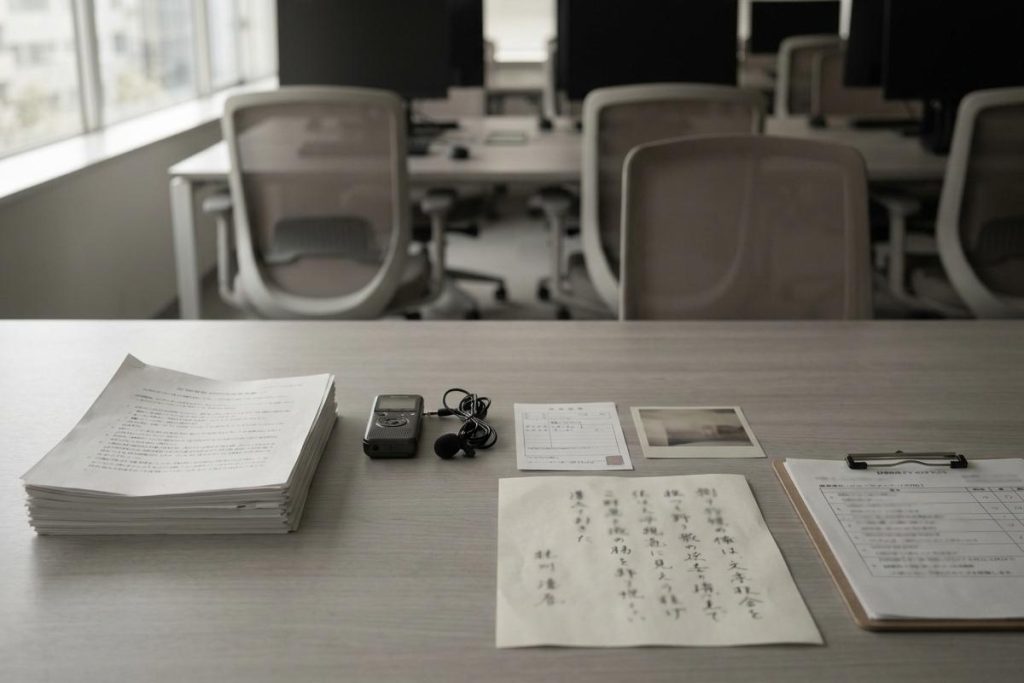
Japanese training data for AI is any Japanese-language corpus, labeled dataset, or evaluation set used to pretrain, fine-tune, align, or benchmark a model. In procurement terms it splits into five categories, and most teams entering Japan need three of them rather than all five.
| Data type | What it is used for | The Japanese-specific pitfall |
|---|---|---|
| Pretraining corpus | Raw Japanese web, books, news text | Japanese is a small fraction of web-scale crawls, and cheap sources are dominated by boilerplate and machine-translated pages |
| Instruction and preference data | SFT, RLHF, and DPO alignment | Instructions written by non-natives read as translated Japanese and teach the model an unnatural register |
| Speech and audio | ASR, voice agents, call analytics | Regional accents, business call conventions, and honorific speech are underrepresented in off-the-shelf sets |
| Document and image data | OCR, form extraction, invoice parsing | Vertical text, handwritten kanji, and mixed full-width and half-width characters break Western OCR pipelines |
| Evaluation and red-team data | Benchmarking, safety, release gating | Therefore, translated English benchmarks are not enough |
The scarcity is structural, not temporary. Japan’s Ministry of Economy, Trade and Industry flagged in 2026 that enterprise data held by manufacturers, banks, and healthcare institutions sits in legacy systems that are incomplete, inaccessible, or too sensitive to move, and announced support for making those datasets AI-ready. The bottleneck has shifted from model scarcity to usable data scarcity.
That shortage has a price. The global AI training dataset market is forecast to grow at roughly 22.6% a year to about USD 16.3 billion by 2033 (Grand View Research, 2026), and Japanese-language work sits at the expensive end of it because qualified annotators are scarce outside Japan.
Why English‑Trained Models Underperform in Japanese

Three properties of written Japanese break assumptions baked into English-first pipelines. Knowing which one is hurting you tells you which dataset to buy first.
No word boundaries and three scripts at once
Japanese runs kanji, hiragana, and katakana together without spaces, and the same term may appear in any of them plus Latin script. Deduplication, chunking, and retrieval built on whitespace tokenization degrade silently, before anyone sees a benchmark number move.
Tokenizer instability
Research published in 2025 found that inconsistent subword tokenization leaves language models measurably perplexed by ordinary Japanese grammar, because segmentation choices hide the morphological cues the model needs (Inconsistent Tokenizations Cause Language Models to be Perplexed by Japanese Grammar). A model that tokenizes Japanese badly cannot be repaired by adding more Japanese text.
Grammaticalized politeness
Japanese encodes social distance in verb morphology through keigo. English has no equivalent, so a model with no explicit register control produces output that is factually correct and socially wrong. This is the failure mode Japanese enterprise buyers notice first, and standard accuracy metrics cannot see it.
Translated English benchmarks therefore are not enough. Japanese-native evaluation suites such as JGLUE and the Nejumi LLM Leaderboard, a Japanese-native evaluation benchmark run by Weights & Biases Japan test script switching, honorifics, and reasoning in Japanese directly. Build your release gate on Japanese-native evaluation data rather than on a translated test set.
Legal Considerations for Using Japanese Content in AI Training

In most commercial cases, yes. Article 30-4 of Japan’s Copyright Act permits using copyrighted works for information analysis, including model training, and it applies to commercial purposes, which is why Japan is often described as a favorable ground for machine learning. But 2026 changed the compliance surface in two concrete ways, and both reach foreign providers serving the Japanese market.
Article 30-4 has limits that bite in practice
The exception does not apply where the purpose is to enjoy the expression itself, and it does not apply where the use unreasonably prejudices the copyright owner’s interests. Its scope is still contested between rights holders and model developers, so your provenance records, not the statute alone, are the defense.
Personal data rules moved
Japan’s Diet enacted the 2026 amendment to the APPI, promulgated on 17 July 2026 as Law No. 56 of Reiwa 8. It introduces a new “statistical processing” concept that permits use of personal data for purposes such as AI development without individual consent, subject to pseudonymization, documented safeguards, and purpose limitation, while tightening scrutiny of cross-border transfers. Most provisions take effect within two years of promulgation. If you train on Japanese personal data using U.S. infrastructure, plan on a transfer risk assessment and an audit trail.
Disclosure is arriving through a comply-or-explain code
On 19 August 2026, a Cabinet Office expert panel on IP in the AI era approved a draft non-binding “principle code” for generative AI developers and providers, drawn up under the AI Promotion Act enacted on 28 May 2025. Businesses that adopt it are expected to publish the models they use, their training data, and their collection and crawling practices, or explain publicly why they will not (Japan to require AI firms to disclose training data). Foreign businesses offering AI services in Japan are within scope.
The practical consequence is simple. Assemble your Japanese dataset so that you could publish a data card tomorrow: source, licence basis, collection method, personal-data handling, and reviewer credentials, recorded per source as you go rather than reconstructed under deadline.
Pricing of Japanese Training Data and Annotation

Budget Japanese work by annotator hour rather than by row, because price is driven by who is qualified to do the task, not by how many items there are. Published 2026 rate surveys put commodity labeling near the bottom of the range and credentialed expert work near the top.
| Work tier | Typical unit | Indicative 2026 range |
|---|---|---|
| Commodity labeling and classification | Annotator hour | $10 to $25 |
| Native-speaker annotation, instruction writing, preference data | Annotator hour | $25 to $60 |
| Domain-expert generation and review (medical, legal, financial) | Annotator hour | $70 to $225 and above |
| Adjudication and benchmark design | Specialist hour | Usually priced per project |
| Speech collection and transcription | Audio hour | Varies with speaker recruitment |
Four variables move your number more than volume does:
- Whether the task needs domain expertise on top of native fluency
- How many review passes you require before delivery
- Whether speakers or documents must be recruited and rights-cleared, or already exist
- How stable your taxonomy is when work starts
Costs come down along a predictable path. Lock the taxonomy and annotation guidelines before scaling, tier your QA so only ambiguous items reach an adjudicator, use a small expert-written seed set to generate and then human-verify a larger set, and batch work into fewer, longer runs so annotators stay on the task long enough to get fast. Teams that skip the guideline phase to save two weeks usually pay for a full re-annotation.
For a fuller picture of how Japanese language work is priced, see the 2026 guide to English to Japanese translation rates.
When to Use Synthetic Japanese Data

Use synthetic Japanese data to scale coverage, and use human data to establish ground truth. Treating synthetic output as a substitute for evaluation sets or for culturally grounded content is where teams get hurt.
The scaling case is real. Working with NVIDIA’s Nemotron-Personas-Japan, NTT Data expanded 450 seed samples into more than 138,000 training examples using 500 synthetic personas—roughly a 300× expansion—specifically to address the shortage of culturally grounded Japanese data. Synthetic generation also reduces privacy exposure, which matters given the APPI changes above.
Where synthetic data works well:
- Expanding an existing labeled set into rarer intents, phrasings, and edge cases
- Producing safe stand-ins for sensitive records in healthcare, finance, or HR
- Rebalancing a skewed class distribution before fine-tuning
- Where it does not:
- Evaluation and release gating, because synthetic data inherits the generating model’s blind spots
- Register, idiom, and cultural nuance, which a model with thin Japanese exposure cannot invent
- Regulated domains, where a wrong-but-fluent example teaches a wrong answer confidently
The effective pattern is hybrid: human experts write a small, high-quality seed and the entire evaluation set, synthetic generation scales the middle, and native reviewers spot-check the output at a fixed sampling rate.
Selecting a Japanese Data Partner

Match the partner to the job. Japanese AI data work spans three quite different capabilities, and few vendors do all three equally well.
By use case
- Building a Japanese-language product feature: prioritize instruction and preference data written by natives, plus a Japanese-native evaluation set
- Deploying a voice or support agent: prioritize speech collection, transcription, and business call conventions
- Processing Japanese documents: prioritize OCR and extraction data covering vertical text and handwriting
- Validating a model before a Japan launch: prioritize benchmark design, rubric development, and human evaluation
By capability: a vendor checklist
Ask for evidence, not adjectives. A partner who cannot answer these quickly is not running a controlled process:
- Who annotates, where do they sit, and are they native speakers of Japanese?
- What is the review structure, and who adjudicates disagreements?
- What inter-annotator agreement do you reach on a task like ours, and how is it measured?
- Can you show the annotation guidelines and terminology control you would use?
- What information security certifications do you hold, and where is data stored during work?
- What licence basis and provenance record is provided with each delivered source?
- In what formats do you deliver, and what documentation comes with the dataset?
- Can you build the evaluation set as well, or only the training set?
Partner Strategy: First-Time Entrants vs. Existing Japanese Teams
If you have no Japanese-speaking staff, the default first choice is an end-to-end language partner that can design the taxonomy, recruit and manage native annotators, and hand back a documented dataset. You are buying judgment about Japanese, not just labor, and nobody in-house can tell a good label from a plausible one.
If you already ship in Japanese and have reviewers on staff, buy narrowly instead. Contract only the scarce piece, usually evaluation data, red-team prompts, or domain-expert annotation, and keep taxonomy ownership internal.
Risks and Pitfalls in Japanese Data Procurement

A language services partner is the right fit for judgment-heavy Japanese work. It is the wrong fit in three situations, and saying so up front saves a procurement cycle.
- That single hour routinely disqualifies datasets that looked fine in a catalog listing. For simple bounding boxes at millions of units, a dedicated labeling BPO will price below any linguistically specialized team
- Pure ML infrastructure work. Data partners build datasets; they do not replace your training stack, model selection, or serving decisions
- Absolute lowest cost per row. Native review, adjudication, and documented provenance cost more than offshore single-pass labeling, and the premium only pays back where register, nuance, or compliance actually matter
One caution applies regardless of vendor. Off-the-shelf Japanese datasets are cheap and fast, but many are scraped or machine-translated. Before licensing one, sample fifty items and have a native speaker rate naturality and register. That single hour routinely disqualifies datasets that looked fine in a catalog listing.
Integration of a Japan-Based Language Partner into Your Pipeline

The value of an in-market partner is that acquisition, annotation, and evaluation stay inside one quality system instead of being stitched together across three vendors.
In the AI data services practice run by At Global Inc., that means data discovery, cleansing, rights management, and synthetic generation on the acquisition side; taxonomy design and multimodal annotation across text, image, and audio on the labeling side; and benchmark plus rubric development on the evaluation side, scored by native speakers against explicit criteria for accuracy, instruction adherence, grounding, tone, and safety.
Two operational practices are worth adopting whether or not you work with this team. First, annotation runs on a four-eyes structure, Annotator to Reviewer to Adjudicator, so disagreements are resolved by a named decision-maker instead of being averaged away. Second, datasets ship in training-ready formats such as JSONL, CSV, and Parquet with documentation attached, which is what makes a disclosure-ready data card possible later.
On the assurance side, the company holds ISO 27001 for information security, ISO 17100 for translation services, and Japan’s Privacy Mark, and works across a network spanning 60 countries and regions, including low-resource languages where orthographic variation and encoding issues are the norm. Those credentials are exactly what Japanese enterprise procurement teams ask about, which matters when dataset work sits inside a wider Japan market entry program.
Frequently Asked Questions

- How much should we budget for a Japanese evaluation set?
-
Scope it by items and reviewer tier rather than as a lump sum. A defensible release-gate set for a single product surface usually runs from several hundred to a few thousand items, each scored by native reviewers against a written rubric, with a portion double-scored to measure agreement. At native-speaker rates of roughly $25 to $60 per annotator hour, plus rubric design and adjudication time, most first evaluation sets land in the low tens of thousands of dollars. Domain-expert review in medical, legal, or financial contexts raises that materially.
- What is the fastest way to get usable Japanese data if we launch in three months?
-
Invert the usual order and build the evaluation set first. It is smaller, it tells you immediately how far the current model sits from acceptable, and it stops you buying training data you do not need. From there, license or collect a narrow instruction set aimed at the specific failures the evaluation exposed, then expand with synthetic generation once natives have verified the seed. Teams that start with a large training data purchase typically discover in month two that they bought the wrong distribution.
- Should we fine-tune a Japanese LLM or adapt our existing model?
-
It depends on where your value sits. If your product logic, tooling, and safety work already rest on a frontier model, adapt it and invest in Japanese instruction data, retrieval content, and evaluation. If you need on-premises deployment, Japan-based hosting, or cost control at high volume, a Japan-developed model may fit better; several are being built under METI and NEDO’s GENIAC program, a government-backed initiative for domestic LLM development, and Japan’s Digital Agency has selected domestic models for government use. Either path still needs your own Japanese evaluation data.
- What are the trade-offs of scraping Japanese web data ourselves?
-
Scraping is cheap and delivers volume quickly, and Article 30-4 gives it a legal footing in Japan that many jurisdictions do not offer. The trade-offs are quality and disclosure. Japanese web text carries heavy boilerplate and a large volume of machine-translated pages that teach a model unnatural Japanese, and the 2026 comply-or-explain code expects you to publish your collection and crawling practices. If you scrape, log provenance per source from day one and filter aggressively for machine-translated content.
- How do we verify a data vendor’s quality claims?
-
Run a paid pilot on a real slice of your data, and grade it with your own gold set that the vendor has never seen. Ask for inter-annotator agreement figures and the adjudication log rather than a headline accuracy claim, confirm that certifications such as ISO 27001 are current and cover the actual delivery site, and have a native speaker on your side, or an independent reviewer, rate a sample for register and naturality. Vendors running a real process supply guidelines and disagreement records without hesitation.
Key Takeaways: Japanese Training Data, Cost, and Compliance
- Japanese underperformance is usually a data provenance and register problem, not a model size problem
- Decide early which of the five data categories you actually need; most teams need three
- Tokenization and keigo are the two failure modes that more raw Japanese text will not fix
- Article 30-4 still supports commercial training in Japan, but the 2026 APPI amendment and the comply-or-explain disclosure code raise the documentation bar
- Assemble every dataset so that a public data card could be published tomorrow
- Price the work by annotator hour and reviewer tier, not by row count
- Use synthetic data to scale coverage and human experts for ground truth and evaluation
- Build the Japanese evaluation set before buying training data, and let it tell you what to buy