Machine Translation Disasters: 5 Guardrails for Japan Entry
Machine translation is now standard equipment. In a 2026 survey of 152 enterprise professionals in the US and Canada, 95% said their organization uses AI translation, and 20.4% reported that quality incidents or regressions went up after they adopted it.
That second number is the one that ends careers. A machine-translation disaster is not a funny sign on a menu. It is a product page that says something obscene, a contract clause that inverts liability, or a support reply that insults a customer in a language nobody on your team can read.
Japan concentrates on this risk. It is one of the hardest language pairs for machine translation, one of the least forgiving markets for sloppy quality, and one where you are least likely to have a native speaker on staff who can catch the error before your customers do.
This guide covers what actually breaks, four documented cases, why Japanese specifically defeats machine translation, and the five guardrails that let you keep the speed without shipping the incident.
- The three error types that cause real damage: mistranslated entities, flipped negation, and hallucination
- Four documented disasters, what caused each one, and the single pattern they share
- Which content you can safely machine-translate for Japan and which content must never ship unreviewed
- A five-step guardrail workflow, with realistic cost ranges for adding human review
TOC
What a machine-translation disaster actually is
A machine-translation disaster is an output that reads fluently and means something the source never said. Fluency is the trap: a garbled sentence gets caught, while a smooth sentence that reverses your meaning ships.
Industry error analysis groups the damaging failures into three categories. Each one behaves differently, and each needs a different control.
- Entity errors. Names, products, dosages, prices, dates, and legal terms get replaced with plausible substitutes. A South American football club machine-translated a player contract into English; the player’s surname Cabezas became “Heads,” the Italian club receiving it discarded the paperwork on the spot, and the transfer collapsed.
- Negation and polarity flips. The output says “is permitted” where the source said “is prohibited,” or quietly drops a “not.” In safety, compliance, and terms-of-service content, this is the failure mode with legal consequences.
- Hallucination. The engine emits content with no basis in the source at all. These are rare, and that is precisely what makes them dangerous: in the landmark study of the phenomenon, researchers had to sift 1.8 million German-to-English translations with ten detection methods just to assemble 3,415 likely-pathological candidates, of which 294 turned out to be genuine hallucinations (Guerreiro et al., EACL 2023).
Note what that implies for your review process. A failure rate low enough to survive a spot-check is exactly the failure rate that reaches production, and short, context-free text like UI strings and support macros gives the engine the least to anchor on.
Four machine-translation disasters and the pattern behind them
Every well-documented case shares one root cause: no qualified human sat between the engine and the public. The engine was not the problem. The missing review step was.
| Case | What shipped | Root cause | Consequence |
|---|---|---|---|
| Osaka Metro, 2019 | The Sakaisuji Line rendered as “Sakai Muscle” line, Tengachaya as “World Teahouse,” “Car No. 3” as “3 Eyes” | Automated translation applied to proper nouns with no native check | Multilingual site taken offline, national and international press coverage |
| Amazon Sweden, 2020 | Product listings containing obscene terms, “Breath of the Wild” as “the savage’s breath,” Argentina’s flag used for Sweden | Automated translation at catalogue scale on launch day | Launch coverage dominated by the errors rather than the store |
| Independiente player contract, 2018 | A surname translated as a common noun | Machine translation applied to a binding contract, with a missing signature compounding it | Paperwork rejected by the counterparty, transfer collapsed |
| Japanese retail and hospitality, 2026 | Billing rules and dispute handling lost in AI-mediated conversations | Real-time AI translation used for high-stakes service interactions | A Tokyo venue began refusing non-Japanese-speaking customers outright |
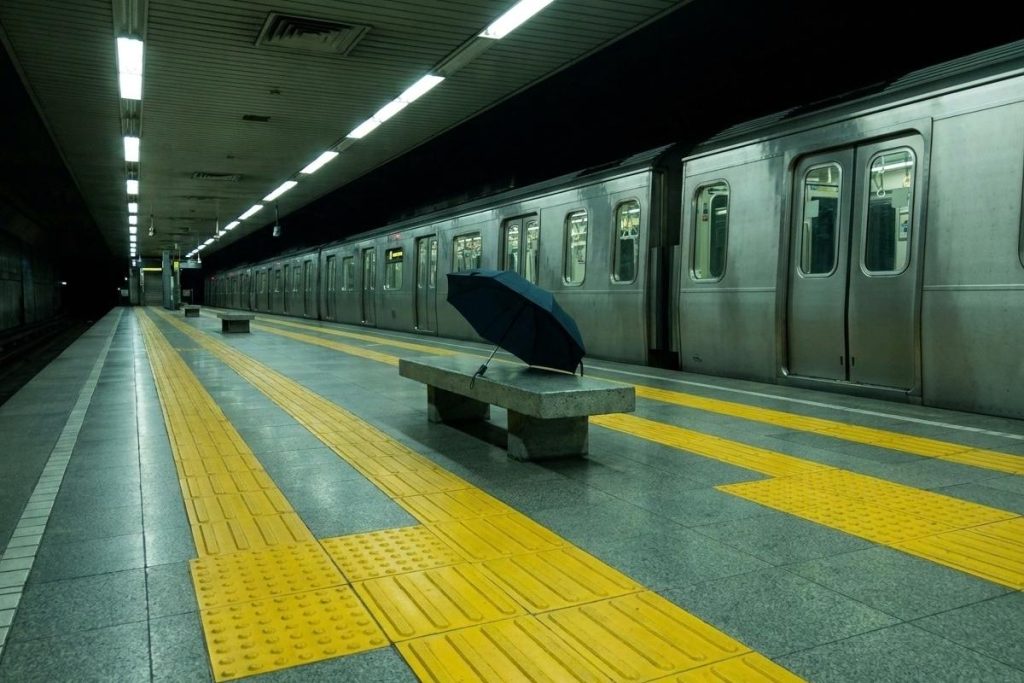
The Osaka Metro case is the one worth studying if you are entering Japan. A well-resourced operator ran its foreign-language site through automated translation to move faster, and the errors clustered exactly where machine translation is weakest, on proper nouns with no context. The site came down entirely (The Japan Times).
The 2026 pattern is quieter but more expensive. A survey by Bridge Multilingual Solutions found that 40% of Japanese retail shops and restaurants polled use AI translation tools, and more than half judged the output unnatural (Unseen Japan).
Businesses on the receiving end are not posting about it. They are simply declining the interaction.
Why Japanese breaks machine translation more than most languages

Japanese defeats machine translation because the information English states explicitly is, in Japanese, either absent from the sentence or carried by grammar with no English equivalent. The engine has to guess, and it guesses confidently.
Four features do most of the damage.
- Subject omission. Japanese routinely drops the subject. Going into Japanese the engine must invent one, and coming out it must recover one. “Canceled the order” can become “We canceled your order” or “You canceled your order,” an operational difference no fluency check will flag.
- Keigo, the honorific register. Japanese marks social distance through verb inflection. An engine that picks plain form for a customer-facing message does not produce an error a spellchecker sees. It produces a message that reads as contemptuous. Academic work on formality-controlled English-to-Japanese translation still treats this as an open problem, not a solved one.
- Counters and numbers. Japanese uses different counter words depending on the object being counted, and full-width digits, era-based dates, and ten-thousand-based units break naive conversion. Pricing tables and specification sheets are where this surfaces.
- Katakana and product names. Brand names, feature names, and technical terms have conventional Japanese renderings that engines do not know and will not invent consistently. The same feature ends up with three different names across your site, your docs, and your UI.
Add one structural factor that has nothing to do with linguistics. Your team cannot proofread the output.
In English to Spanish, someone in the office usually notices. In English to Japanese, a US IT company typically has nobody who can read the shipped result at all.
Which content you can safely machine-translate for Japan
You can safely machine-translate content where an error is cheap to reverse and invisible to the market, and you cannot machine-translate content that is public, binding, or brand-defining. Sorting your content by that single test is the highest-leverage decision in a Japan launch.
| Content type | If it is wrong | Recommended workflow |
|---|---|---|
| Internal wiki, chat, ticket triage | Minor confusion, fixed in a reply | Raw machine translation is fine |
| Long-tail support articles, changelogs | Some friction, easy to correct | Machine translation plus post-editing (MTPE) |
| Website, landing pages, product UI strings | Lost conversions, brand damage | Human translation plus native review |
| Marketing campaigns, taglines, ad copy | Public ridicule, wasted spend | Transcreation by a native copywriter |
| Contracts, terms, privacy notices, IP filings | Legal exposure, unenforceable terms | Specialist human translation, no exceptions |
| Regulated content in medical, financial, or safety domains | Regulatory rejection, liability | Specialist translation plus subject-matter review |
UI strings deserve a specific warning. They are short, context-free, and reused across screens, which makes them the worst possible input for an engine and the most visible surface in your product.
If you machine-translate one thing on this list without review, do not let it be the interface.
Choosing your approach by company type

If you are entering Japan for the first time with no Japanese-speaking staff
Assume you cannot detect errors, and design around that. Your controls have to be procedural, because you have no ability to spot-check the output yourself.
Start with a locked glossary and style guide before a single word is translated. Put every public-facing asset through a named native reviewer, and require in-context review, meaning the reviewer sees the actual page or screen rather than a spreadsheet of strings.
Budget for a rollback plan as well. Know in advance who can take a page down within an hour.
This is also the profile where a single Japan-side partner covering translation, review, and in-market communication is the default first choice when you are not sure where to start. Coordinating a freelance translator, a separate reviewer, and a local agency across a fifteen-hour time difference is where first-time entrants lose their schedule.
If you already have a Japanese entity or a local reseller
You have review capacity, so your risk shifts from accuracy to consistency and bandwidth. Your Japanese sales lead can catch a keigo error, but they are not a linguist and their time is not free.
Use MTPE aggressively for volume content, and reserve your internal Japanese speakers for final sign-off rather than line-by-line editing.
The failure mode here is a well-meaning account manager rewriting terminology on the fly, leaving your product with four names for the same feature. Lock the glossary centrally and make it the single source of truth.
Five guardrails that stop machine-translation disasters before they ship

Preventing a disaster is a process question, not a tooling question. These five controls stop the large majority of incidents, and none of them require you to give up machine translation.
- Classify content by blast radius before you translate. Use the table above, route each bucket to a fixed workflow, and put the routing rule in writing so nobody has to improvise under deadline.
- Lock terminology first. Build a Japanese glossary covering product names, feature names, UI labels, and the terms your competitors already own. In enterprise practice this is now standard: 79.6% of surveyed teams require glossary enforcement and 75.7% mandate human proofreading (Slator).
- Require a second pair of eyes on anything public. ISO 17100, the international standard for translation services, requires that a second qualified linguist revise the translator’s work. That two-person rule is the specific control the Osaka Metro and Amazon Sweden workflows lacked.
- Review in context, not in a spreadsheet. Most catastrophic errors are invisible at string level and obvious on the rendered page. Stage the Japanese site and have the reviewer walk it like a customer.
- Rehearse the rollback. Decide now who takes a page down, who drafts the Japanese apology, and how fast it happens. Osaka Metro’s response, pulling the site and then auditing, was correct, and it was possible because someone had the authority to do it.
In our own localization work at AtGlobal, Ltd., the step that moves the needle most is the second one. When the glossary is built before translation rather than negotiated during review, review cycles typically drop from three rounds to one, which usually recovers more schedule than the machine translation gained in the first place.
How much does a human safety net cost for Japanese content?

Adding human review to Japanese content typically costs less than a single week of delayed launch. Market rates for professional English-to-Japanese translation are commonly quoted in the range of USD 0.12 to 0.25 per English source word, with MTPE generally priced at roughly 50 to 70% of the full human rate.
Four variables move your number more than vendor choice does.
- Content type. Marketing transcreation and regulated content sit at the top of the range, while repetitive documentation sits at the bottom.
- Volume and repetition. Translation memory means the second version of a page costs a fraction of the first, so consolidating content before translating pays twice.
- Turnaround. Rush surcharges are real and avoidable. Most Japan-launch overruns come from translating late, not from translating expensively.
- Glossary maturity. Terminology decided upfront is cheap. Terminology relitigated in review is expensive.
For a detailed breakdown of what drives Japanese rates, see our 2026 guide to English to Japanese translation rates, and our comparison of AI, PEMT, human translation and transcreation for choosing between workflows.
When machine translation fits, and when human review does not
Machine translation is genuinely the right tool for high-volume, low-stakes, internally consumed content, and refusing to use it is its own kind of waste. If you are translating a support backlog nobody has read in two years, MTPE will serve you well.
It is also the right tool when speed has real option value, such as testing whether a Japanese-language help center generates any traffic at all before committing to full localization. Ship it, measure it, then invest in the pages that earn it.
Be equally clear about where the human-review approach is a poor fit. If your content changes hourly, a review gate will not keep up, and the honest answer is to publish less in Japanese rather than pretend the gate exists.
Human review is also not a guarantee. It is a control that catches the error categories above, and it does not fix a product that was never designed for the market.
Japan’s appeal to foreign companies is rising, with roughly 60% of foreign-affiliated firms planning to strengthen or expand operations there according to JETRO’s 2025 survey of 1,520 companies. Language quality is table stakes in that market, not strategy.
Frequently asked questions
- How much does it cost to fix a machine-translation disaster after launch?
-
Far more than preventing it, because the cost is rarely the retranslation itself. You pay for emergency retranslation at rush rates, engineering time to redeploy, a Japanese-language apology that itself needs professional handling, and the sales pipeline that stalls while the incident is visible. Osaka Metro removed an entire multilingual site rather than patch it. A reasonable planning assumption is prevention in the low thousands of dollars and remediation at ten to twenty times that, plus a launch window you cannot buy back.
- Is DeepL or ChatGPT better for English to Japanese?
-
Both produce usable raw output, and neither removes the need for review. Large language models handle context and register better than older neural engines and can be steered with instructions about formality and terminology, while dedicated engines remain strong on consistency across large volumes. The 2026 enterprise pattern is telling: 47.4% of teams now route different content to different providers rather than standardizing on one. Choose based on your terminology enforcement and data-handling requirements rather than on benchmark scores.
- What are the pros and cons of MTPE for a Japan launch?
-
On the plus side, MTPE is typically 30 to 50% cheaper than full human translation, substantially faster, and well suited to documentation and support content. On the minus side, post-editors work from flawed output, which tends to anchor them to machine phrasing, so MTPE rarely reaches transcreation quality for marketing copy. It also underperforms badly on short, context-free strings such as UI labels. Use it for volume, not for your homepage.
- Can our Japanese salesperson just check the machine output?
-
For a final sanity check, yes. As your only quality control, no. A native speaker will catch obvious keigo errors and awkward phrasing, but they are unlikely to catch terminology drift across a hundred pages, mistranslated legal clauses, or the omissions that make a fluent sentence wrong. It also spends your most expensive local hire on work a linguist does faster and more consistently.
- How do we evaluate a Japanese translation vendor?
-
Ask three questions. Do they hold ISO 17100, which mandates independent revision by a second qualified linguist? Do they hold ISO 27001 or Japan’s Privacy Mark, which matters if you are sending them customer data or unreleased product information? And will they show you a named reviewer and a sample glossary before you sign? Our guide on how to choose a Japanese translation agency walks through the full evaluation.
Machine-translation disasters in Japan: key takeaways for market entry

- Machine-translation disasters are fluent, not garbled, which is why unreviewed output ships errors that a human draft never would
- Three error categories cause nearly all real damage: mistranslated entities, flipped negation, and hallucination, and hallucinations are rare enough that spot-checking will never reliably find them
- Every documented disaster shares one root cause, which is that no qualified human sat between the engine and the public
- Japanese amplifies the risk through subject omission, keigo, counters, and katakana product names, and your team almost certainly cannot proofread the result
- Sort content by blast radius: raw machine translation for internal text, MTPE for documentation, human translation plus native review for anything public, specialists for anything binding
- UI strings are the highest-risk and most-machine-translated content in a typical Japan launch, so review them in context on the rendered screen
- Lock terminology before translating rather than fixing it in review, since it is the single change that most reduces both cost and cycle time
- Rehearse the rollback before launch, because the organizations that recovered well from public failures were the ones who could take the page down within the hour
Based in Japan, AtGlobal, Ltd. has supported over 1,000 companies since 2002, working under ISO 17100, ISO 27001, and the Privacy Mark across marketing translation, multilingual marketing, and in-market sales. If your Japanese content is currently shipping without a named reviewer, that is the gap worth closing first, and our breakdown of Japanese website translation mistakes that kill conversions is a practical place to start.