Product Localization in Practice: What KFC Sells in 10 Countries
KFC uses the same logo, the same Colonel and the same frying methods in almost every market it enters — and sells a genuinely different product in nearly all of them.
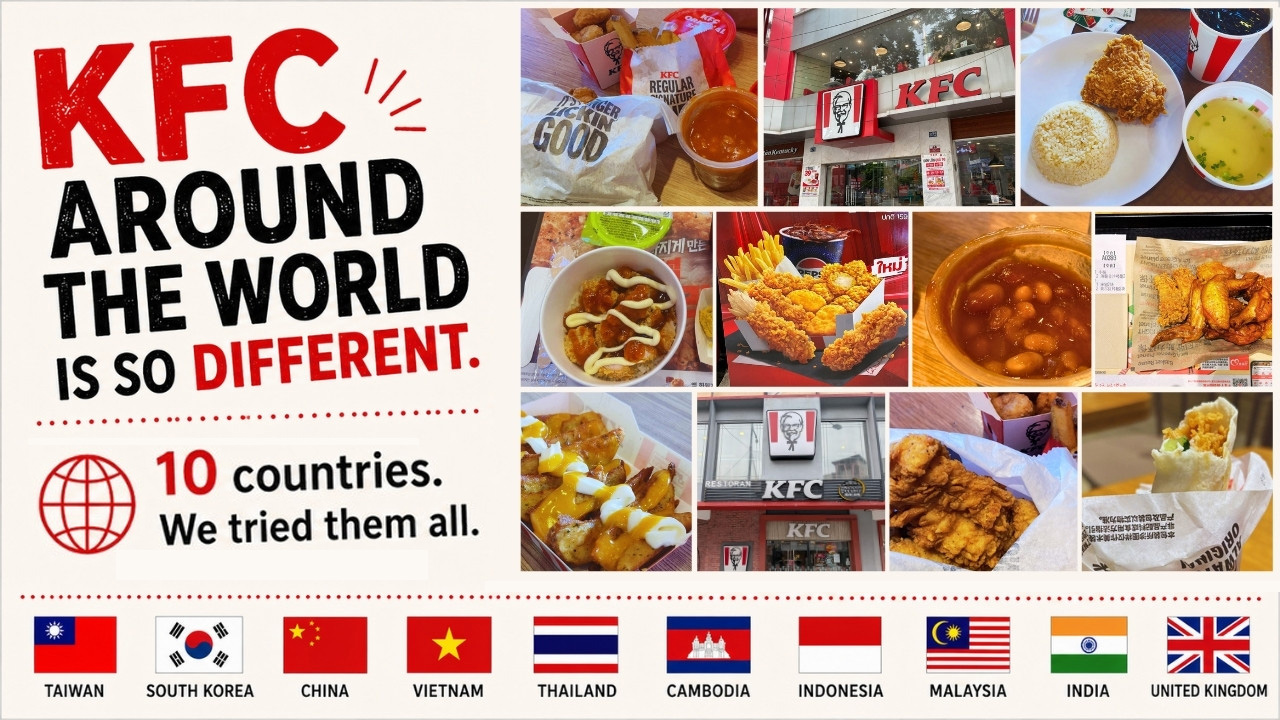
In June and July 2026, ten of our colleagues who actually live in Taiwan, South Korea, China, Vietnam, Thailand, Cambodia, Indonesia, Malaysia, India and the United Kingdom each walked into their neighborhood KFC, ordered what locals order, paid in local currency, photographed the tray and told us honestly what they thought.
What we received was not a food review. One meal ranged from US$1.90 in Vietnam to about US$14.45 in London — nearly an eightfold spread. Five of the nine Asian markets we visited treat white rice as the default, not a novelty. One market sells no biscuits at all. Another sells crayfish.
If you market a product into Asia, KFC is the cheapest product localization textbook available, because you can eat it. Here is what our staff found, market by market, and the patterns worth adopting.
- Where a single global brand actually changes across 10 markets, and where it deliberately holds firm
- What one KFC meal costs in each market in US dollars, and how that compares with local food prices
- Five product localization patterns that repeat across Asia and catch Western brands off guard
- A 10-point product localization checklist for pressure-testing your own product, naming and pricing before launch
TOC
What Is Product Localization? A Definition That Survives Contact With a Market
Product localization is the work of adapting a product itself — not only its language — so that it feels native in a specific market: the format it is sold in, what it is called, how it is priced against local alternatives, which requirements it has to meet, and how it is bought.
Translation is one input to that work, not a synonym for it. Our ten markets make the distinction concrete, because KFC translated almost nothing and localized almost everything.
| Layer | What it changes | Typical output | Example from our 10-market survey |
|---|---|---|---|
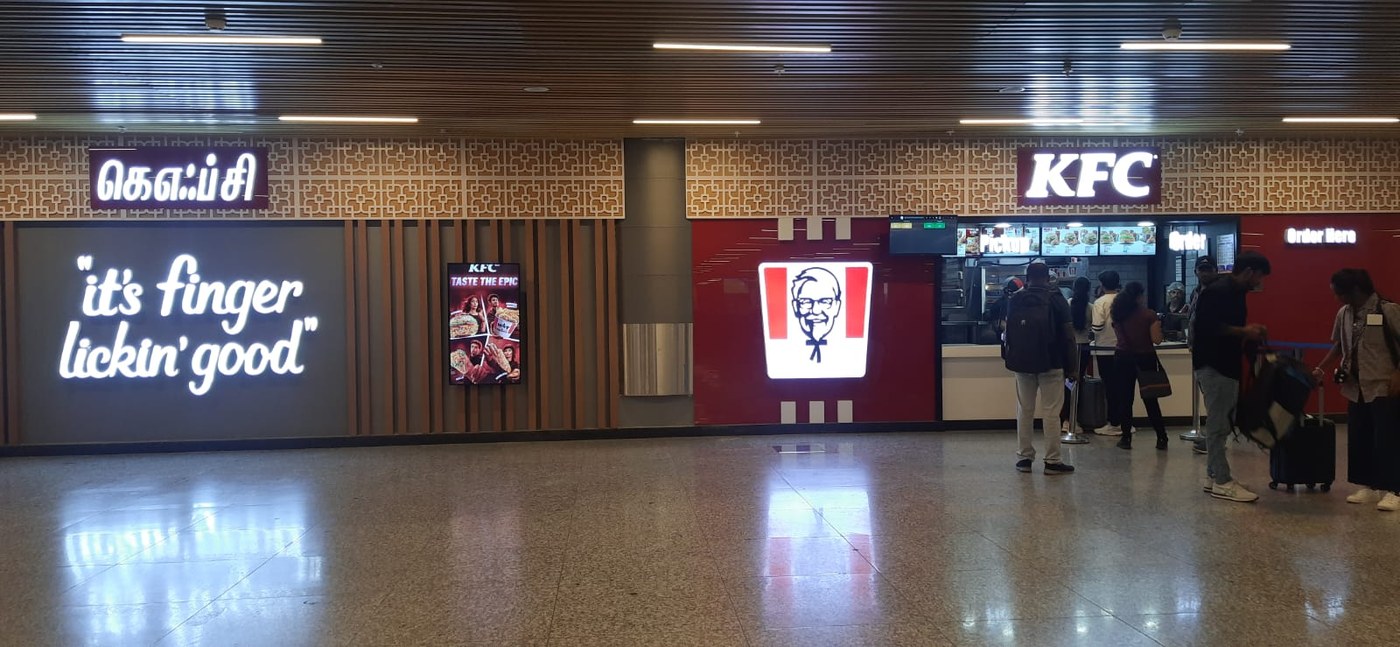
| Translation | Words only | The same content in a new language | Tamil signage alongside English in Chennai, required by state rules |
| Transcreation | Words, plus the effect they have | New copy written for local appetite | The UK’s “Zinger”; Vietnam’s “stuffed-full combo” |
| Product localization | Format, price, requirements and experience | An offer that reads as locally built | Rice plates in Cambodia, vegetarian menus in India, app-only ordering in China |
The practical test of product localization is not whether local customers can understand your product. It is whether they would ever guess it was built somewhere else.
That test is why this report is a field guide rather than a summary of theory. Everything below is a product localization decision somebody made, that our colleagues then paid for and ate.
At-a-Glance: How KFC’s Menu Changes Across 10 Markets
Every market in our survey sells fried chicken. Almost none of them sells the same meal around it. The table below is the fastest way to see how far a single brand will bend.
| Market | The local-only item our staff ate | Price (approx. USD) | The local rule KFC follows |
|---|---|---|---|
| Taiwan | Okonomiyaki-style seafood burger; peanut butter crispy chicken burger | $8.45 (XL set) | Japanese sweet-savory flavors are mainstream, and richer is better |
| South Korea | Kenchibap — a chicken-and-rice bowl | $3.65 | Cup-rice convenience culture, plus aggressive buy-one-get-one promotions |
| China | Beijing-duck-style chicken wrap; seasonal mala crayfish | $3.00 (lunch set) | App-first ordering, and menus that chase seasonal food trends |
| Vietnam | Cơm gà rán — fried chicken with white rice | $1.90 | Rice is the meal; soup belongs beside it |
| Thailand | The Box Signature with sweet chili chicken and egg tart | $4.80 | Sweet-chili heat first, rice over burgers, dessert always |
| Cambodia | 1-pc Rice Plate, rice cooked in chicken broth | $3.70 | Rice plates with soup, in a market with only 14 stores |
| Indonesia | Nasi uduk (coconut-herb rice), perkedel, tofu-meatball soup | $2.15 (combo) | No rice, no meal — and halal certification is non-negotiable |
| Malaysia | Nasi lemak combo; cereal cheese fries; Portuguese egg tart | $3.90–4.40 | Chinese, Indian and Malay palates share one menu board |
| India | Veg Zinger Burger; shawarma; Smokey Red Chicken Rice Bowl | $2.00 | A vegetarian option in every store, halal throughout |
| United Kingdom | Boneless Banquet with baked beans and gravy | $14.45 | Season it yourself, and no biscuits — cookies instead |
USD figures are approximate conversions at early-August 2026 rates, based on what each colleague actually paid. Japan is our baseline throughout: one piece of Original Recipe chicken runs about US$1.80, and a set US$4.30–5.50.
Five Product Localization Patterns That Repeat Across Asia
Across ten markets, the same five decisions kept reappearing. None of them is about translation in the narrow sense, and all five are decisions a Western brand has to make before launch rather than after.
1. Why Rice Becomes the Core Product in Asian Markets
In five of the nine Asian markets we visited — Vietnam, Thailand, Cambodia, Indonesia and Malaysia — white rice is the default carbohydrate on the KFC menu, and the burger is the alternative.
This matters more than it sounds. Rice is “the primary staple food for more than half the world’s population,” with Asia the largest consuming region, according to USDA Economic Research Service data updated in December 2025. A brand that treats rice as a regional add-on has already misread the center of the plate.
Our staff in Thailand put it plainly: almost nobody in the store was ordering a burger. In Indonesia, the local phrase is “belum makan nasi, belum makan” — if you haven’t eaten rice, you haven’t eaten.
2. How KFC Adjusts Its Signature Flavor for Local Palates
The flavor a brand believes is untouchable is often the first thing adjusted. In Vietnam, our colleague reported that the plain fried chicken carried none of the distinctive KFC spice profile familiar from Japan — a deliberate-looking concession to local palates.
The tradeoff is real and it cuts both ways. The same colleague’s verdict: fine as fried chicken, but it will not satisfy anyone who walked in wanting the KFC taste specifically.
That is the exact tension every brand faces. Adapt too little and you are irrelevant; adapt too much and you have thrown away the reason people chose you.
3. Why Product Names Are Transcreated for Appetite, Not Literal Meaning
Nowhere in our survey did a market simply translate a product name. Vietnam sells a large combo whose Vietnamese name means, roughly, “stuffed-full combo.” The UK uses “Zinger” — a word that means a sharp, witty remark — to signal spice heat without ever mentioning chili.
Neither name would survive a literal translation brief. Both work because they were written to trigger appetite in the target language, which is the entire job of transcreation as opposed to translation.
4. Designing for Religious and Dietary Requirements from Day One
In India, every store our colleague visited carried vegetarian options as a matter of course. That is not decoration: Pew Research Center found 39% of Indian adults describe themselves as vegetarian and 81% restrict meat in some way (2021 data; the pattern has held since).
In Indonesia and Malaysia, halal certification is visible on packaging rather than buried in a compliance file. Indonesia’s requirement is also tightening. Under Law 33/2014 on Halal Product Assurance, mandatory halal certification for imported food and beverage products is being phased in, with the deadline set to be no later than 17 October 2026, as summarized by Australia’s Department of Foreign Affairs and Trade. Certification runs through the state agency BPJPH, and the law also covers slaughtering, storage, transport and packaging.
Designing so that nobody is excluded is the most demanding form of localization there is, and the least optional.
5. Localizing the Digital Experience as Deeply as the Menu
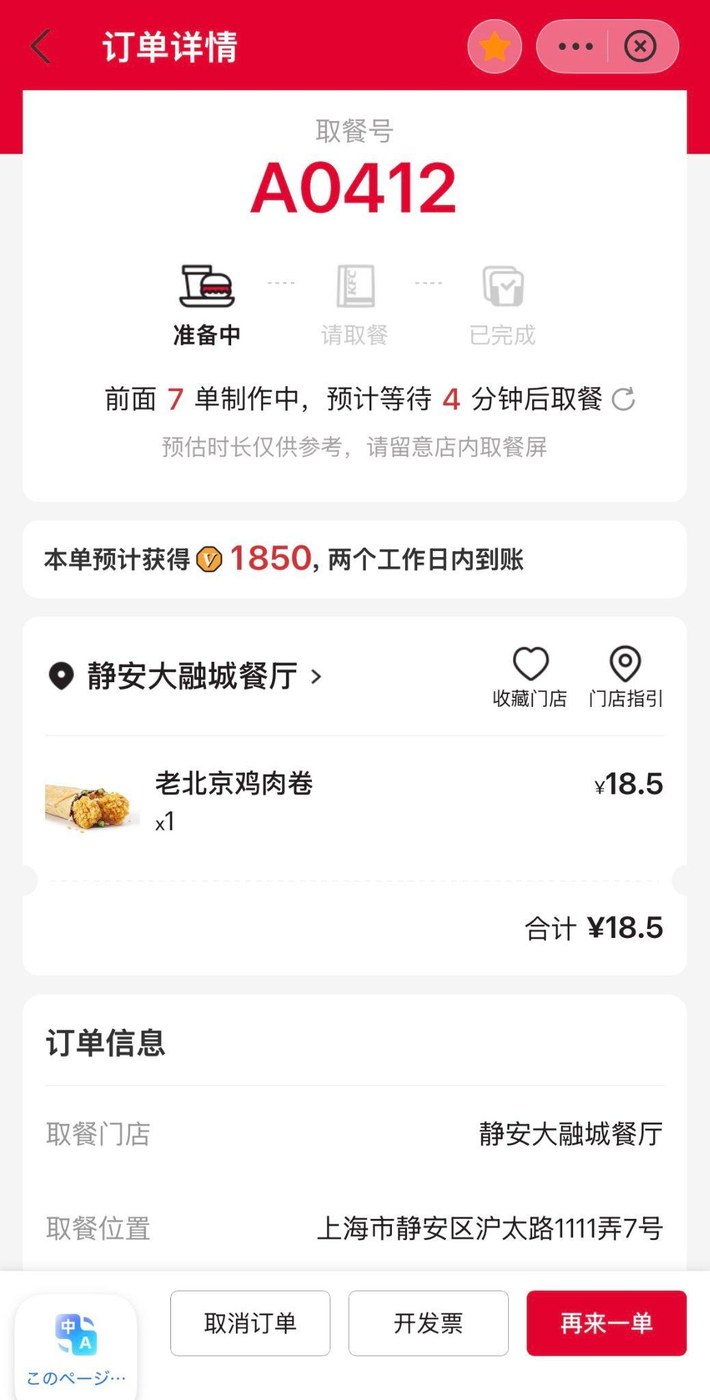
In China, ordering is effectively app-only. Our colleague’s screen showed not just the order but the queue: seven people ahead, about four minutes. K Coffee sits on the menu at 9.9 yuan (about $1.45) with near-permanent coupons, and there is a subscription card — 9.9 yuan for 15 days, 19 yuan for 30.
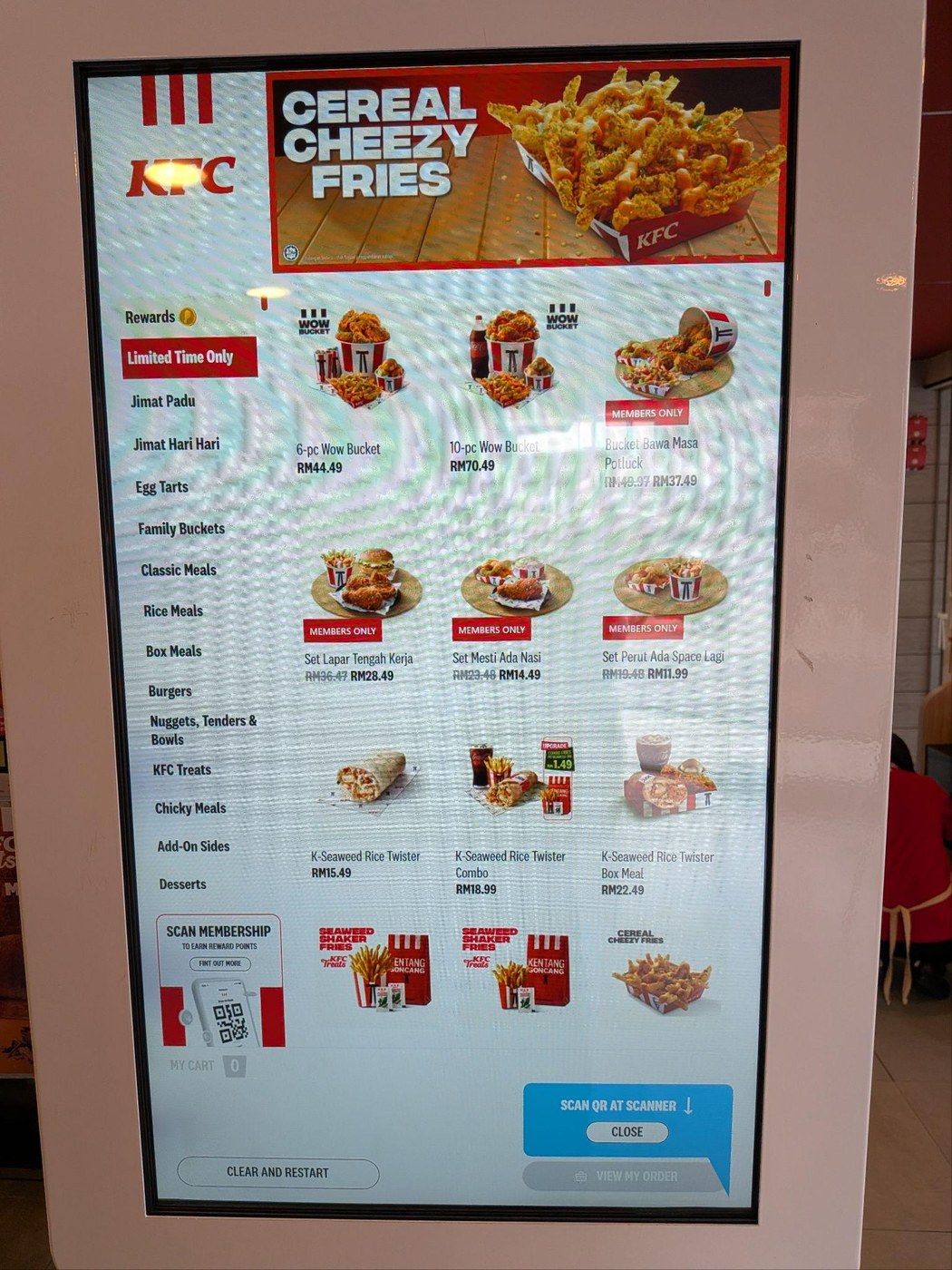
Malaysia pushes the same direction from the other end: in-store kiosks are covered in scan-for-points prompts.
If your Asia plan localizes the product but ships the same web funnel, app flow and loyalty mechanic you use at home, you have localized half the experience.
Product Localization Examples: What KFC Actually Looks Like in 10 Markets
Each report follows the same shape: the local-only item, what it cost, how it tasted, the unfiltered comment from the colleague who ate it, and the one thing a marketer should take away. Japan is the comparison point throughout.
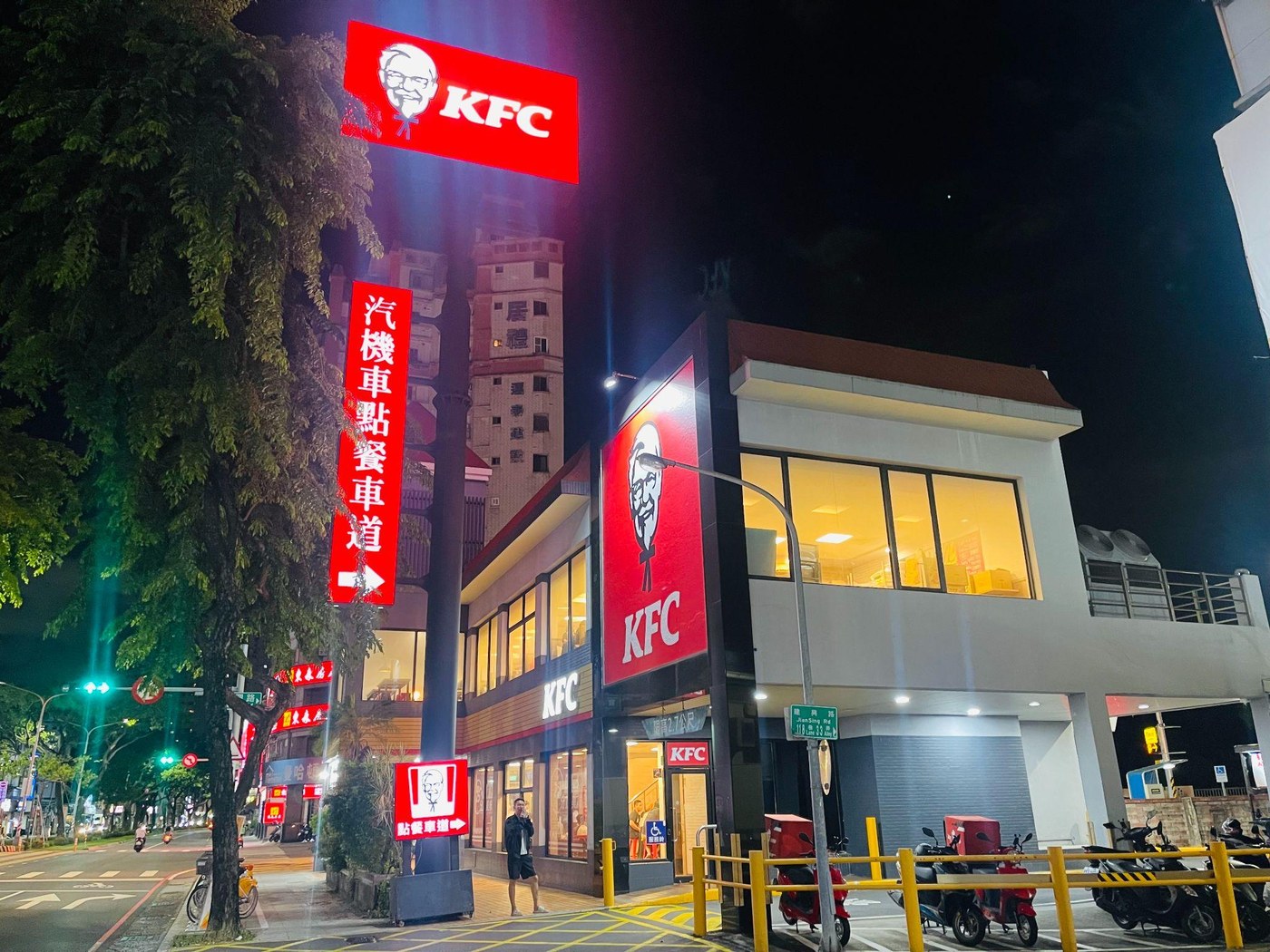
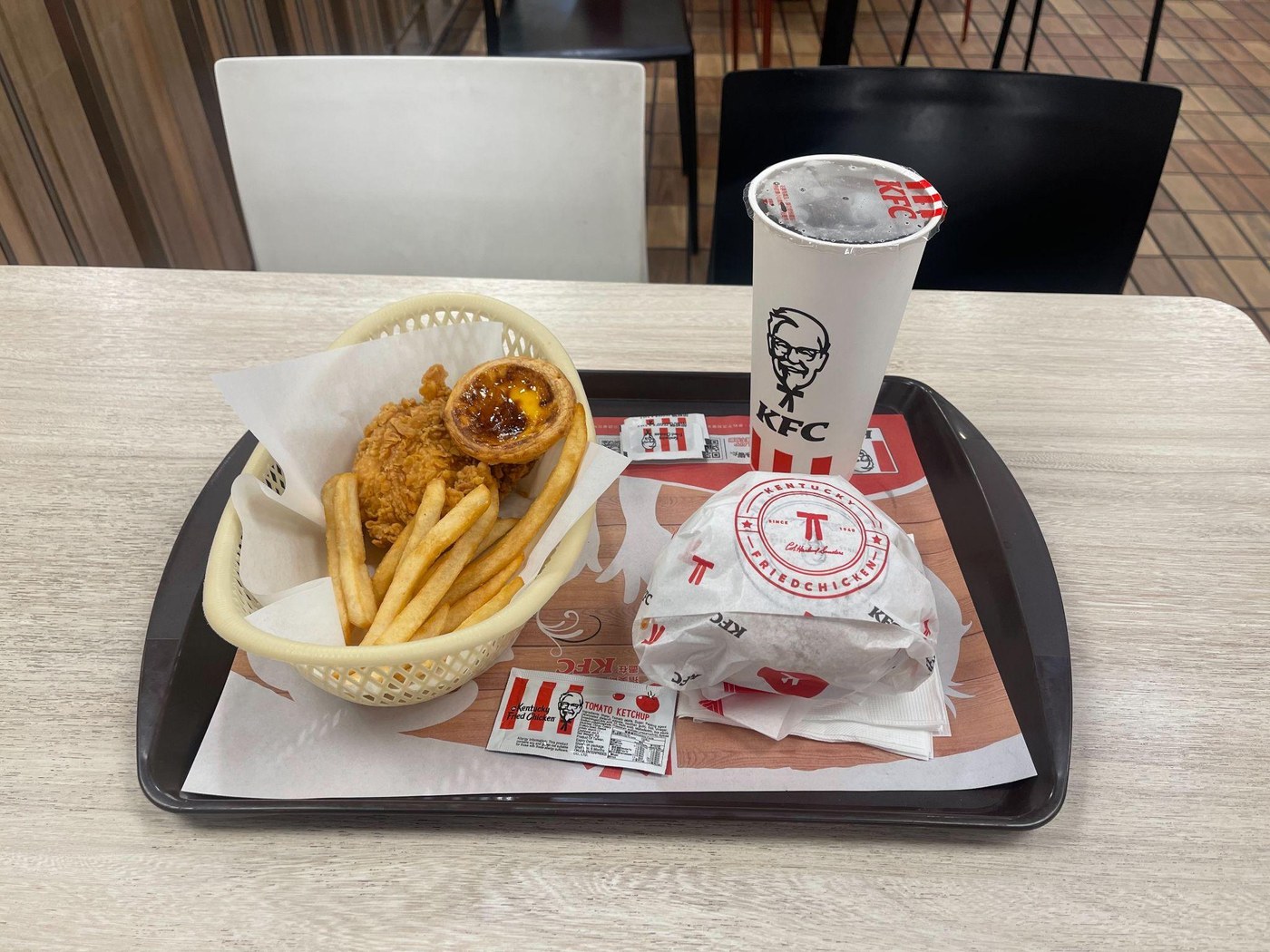
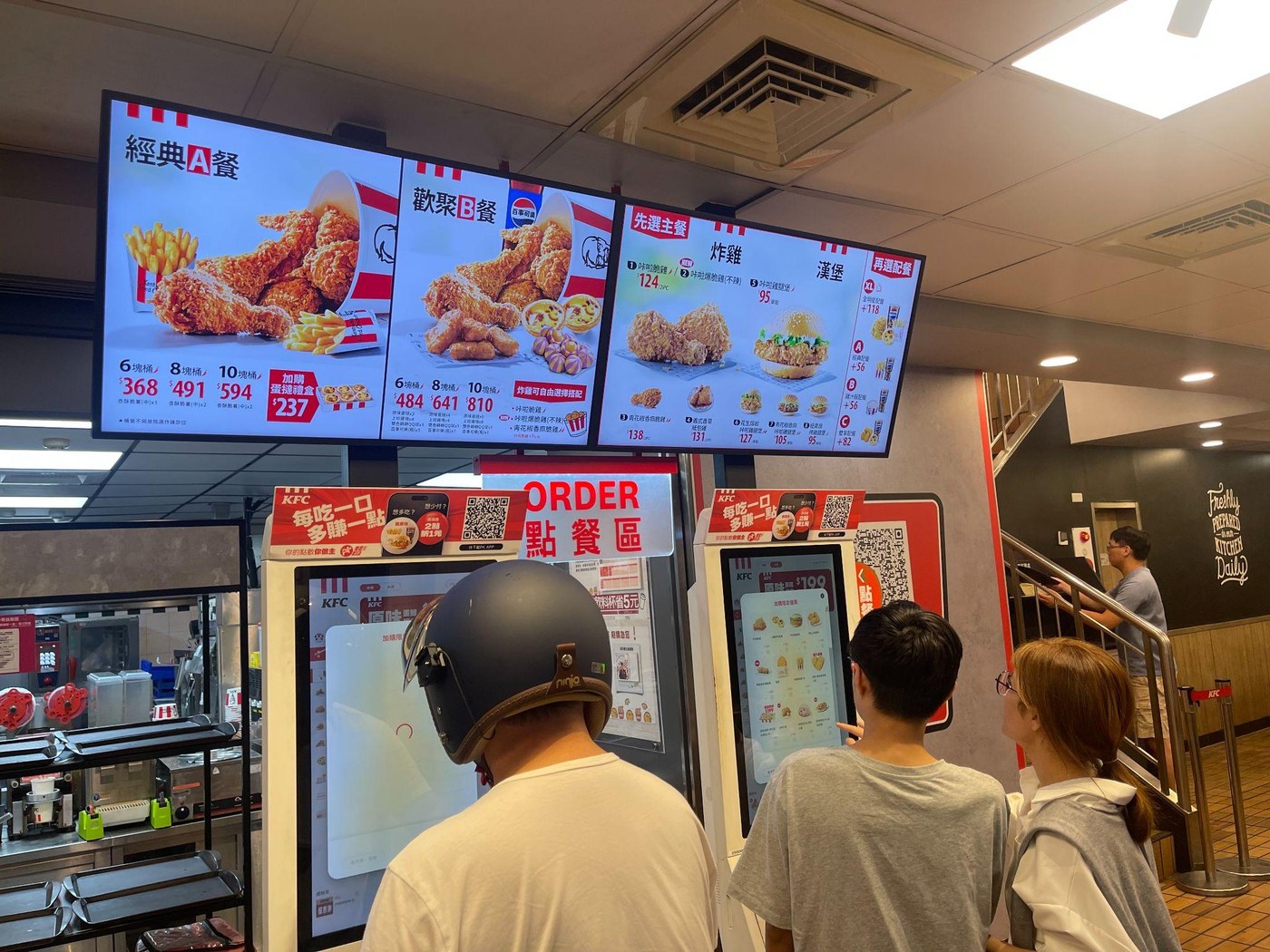
Taiwan: Rich, Japan-Adjacent Flavors and Heavy Portions
Taiwan runs the richest menu in our survey, and leans hard on Japanese flavor cues.
- Local-only menu: 大阪燒海陸堡, an okonomiyaki-style seafood burger with double shrimp and crispy chicken; 花生脆雞堡, a peanut butter crispy chicken burger
- What our staff paid: TWD 273 (about $8.45) for the okonomiyaki XL set; TWD 129 (about $4.00) for the small peanut butter set
- How it tasted: sweet, salty, crunchy and unapologetically greasy — “heavy enough to sit in your stomach afterwards.” Portions felt about 1.5x Japan
- Voice from our staff: “A thick peanut butter sauce poured right over it — a total staple. That sweet-salty hit with the crunchy chicken is sinfully good, and one bite gets you hooked. The egg tarts are hugely popular too.”
- Bottom line: Japan’s okonomiyaki-mayo-bonito flavor axis travels to Taiwan intact. Regional flavor adjacency is a shortcut worth mapping before you invent something new.
South Korea: Rice Bowls and a Promotion-Driven Fast-Food Culture
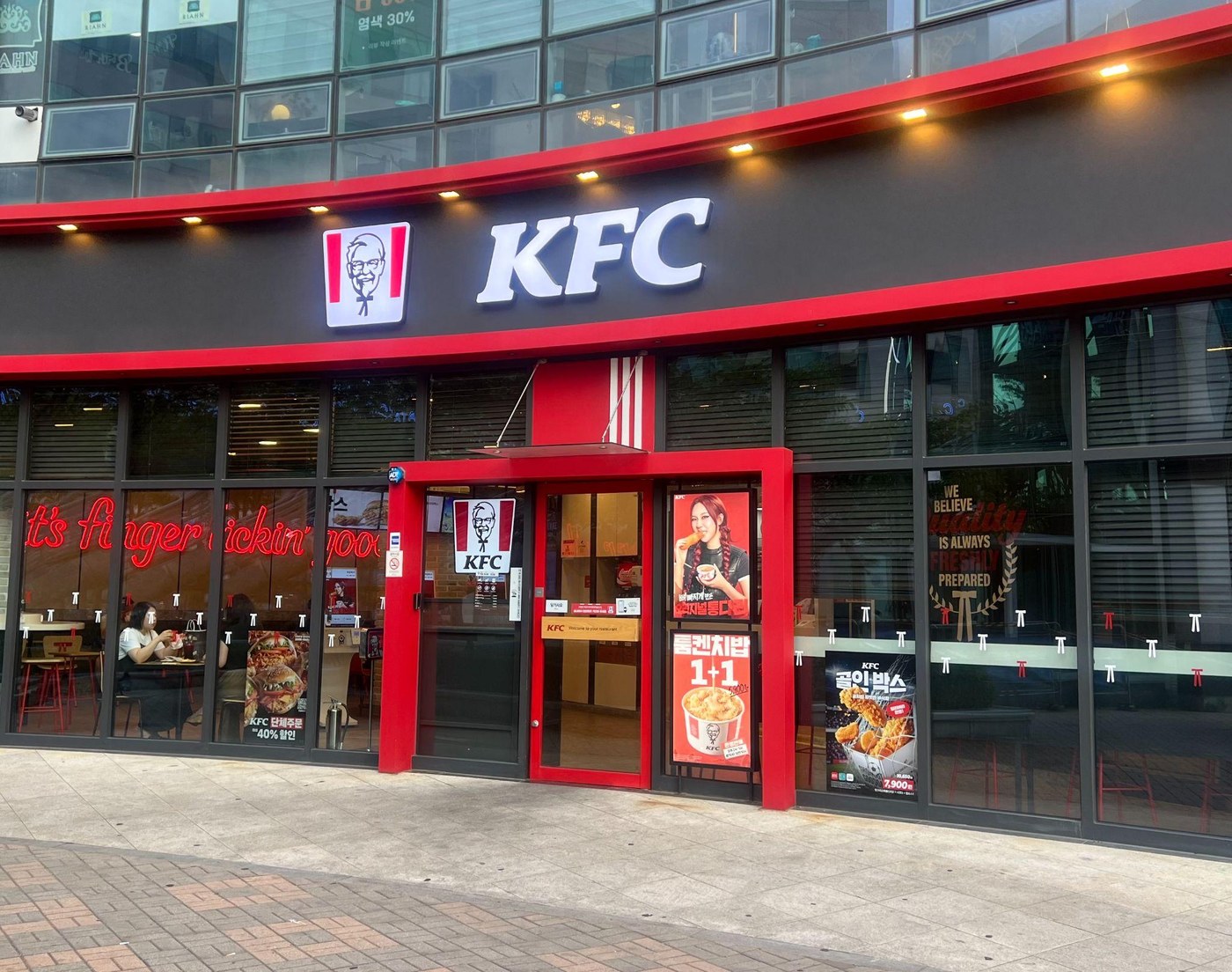
In the world’s most competitive fried chicken market, KFC Korea competes on format and promotion rather than on the chicken itself.
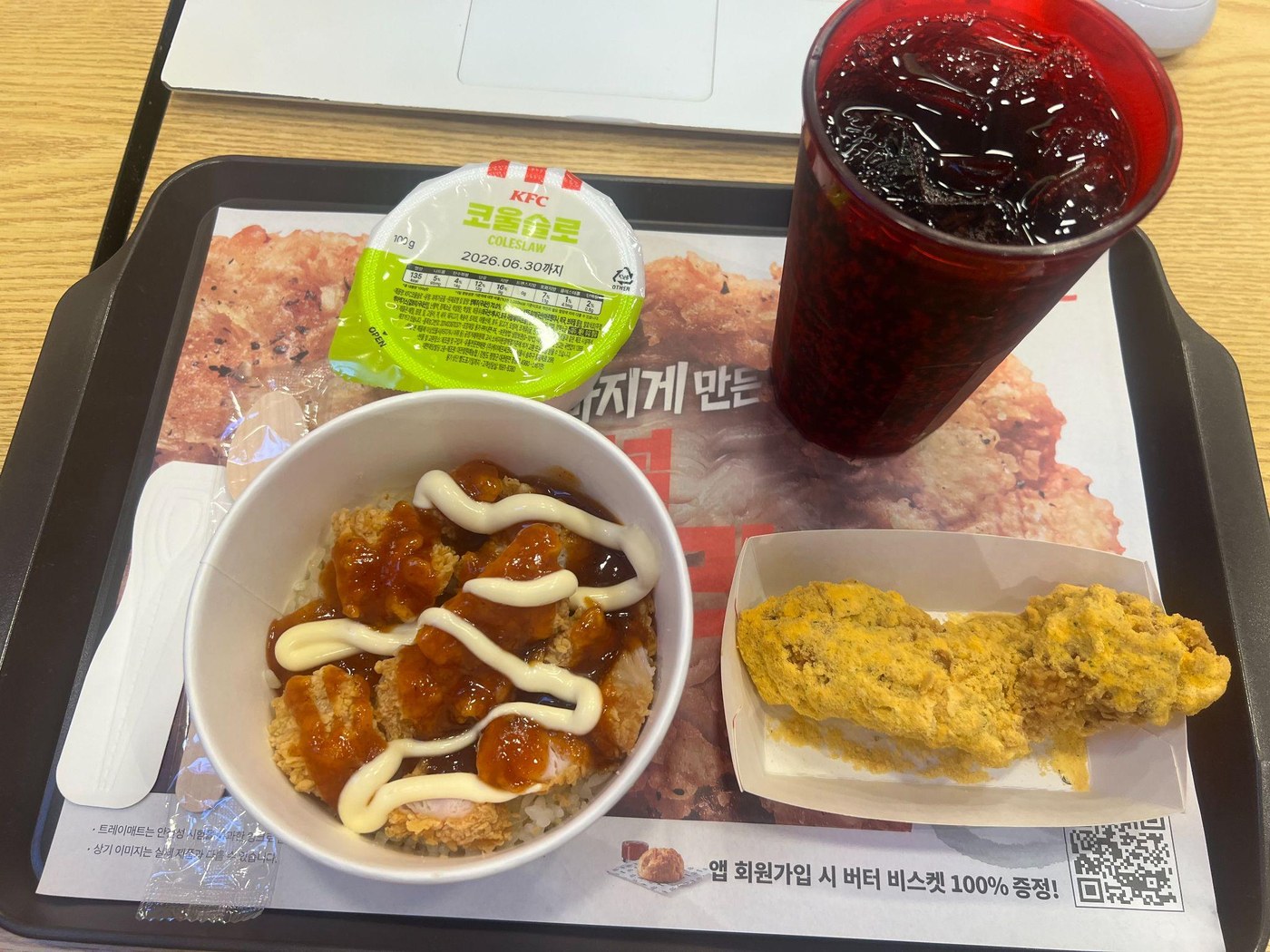
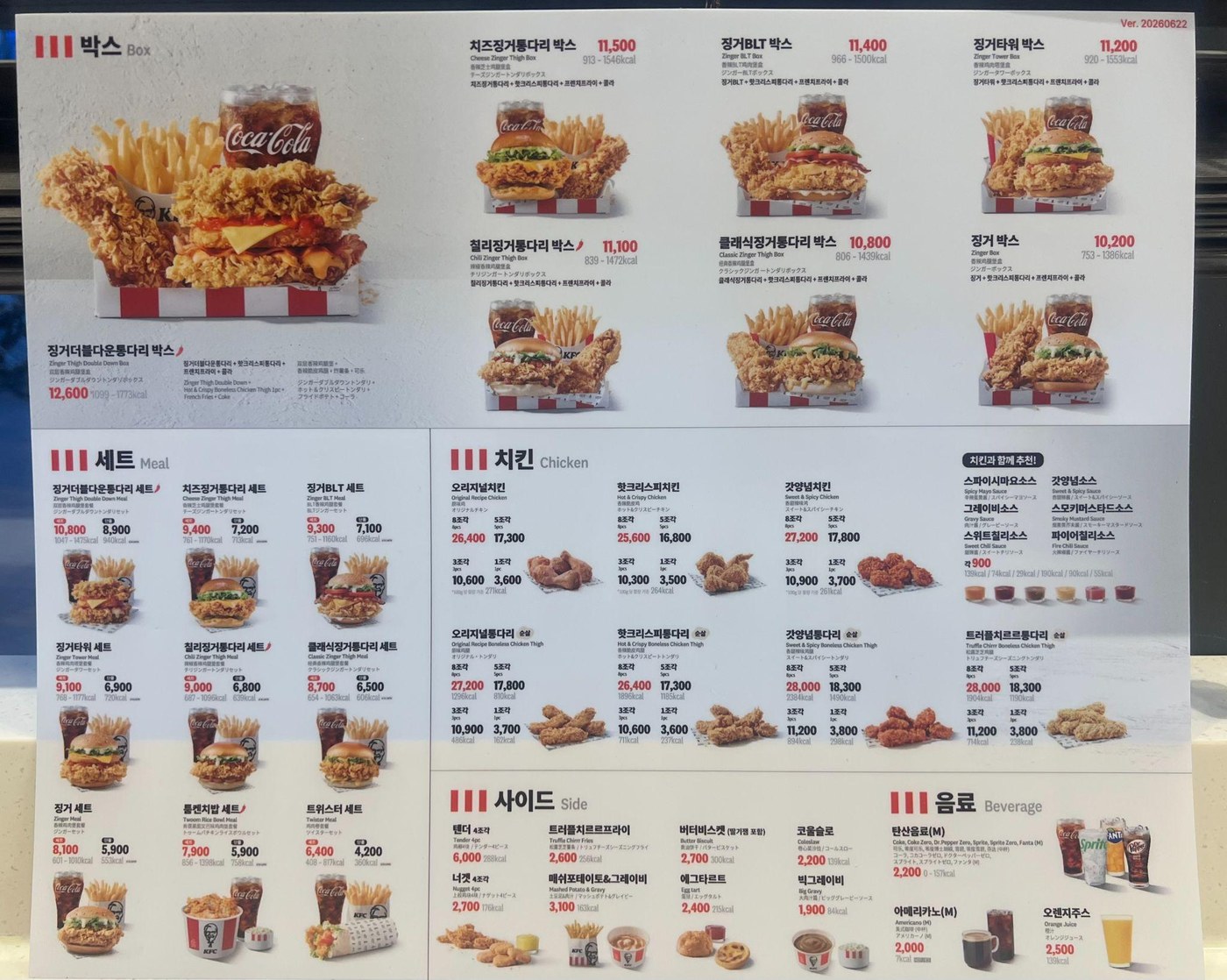
- Local-only menu: 켄치밥 (kenchibap), short for “Kentucky chicken rice” — a bibimbap-style bowl of chicken, rice and sauce; boneless chicken in a truffle cheese flavor
- What our staff paid: KRW 5,200–6,200 (about $3.65–4.40) for kenchibap; KRW 3,900 (about $2.75) for the truffle cheese chicken
- How it tasted: our Korean colleague has never eaten KFC in Japan, so no direct comparison — but was glad to find sweet-and-spicy sauced options
- Voice from our staff: “I’d always pictured KFC chicken as quite oily, and honestly thought it would struggle in Korea, a country that takes chicken seriously. But there are more Korean-taste options now, so I think I’ll enjoy it from here on.”
- Bottom line: Korea’s convenience-store promotional grammar has migrated into fast food. Chicken Night runs 21:00–22:00 daily and Chicken All Day lands on the 11th of every month, both at buy-one-get-one. In a saturated category, the promotional calendar is part of the product.
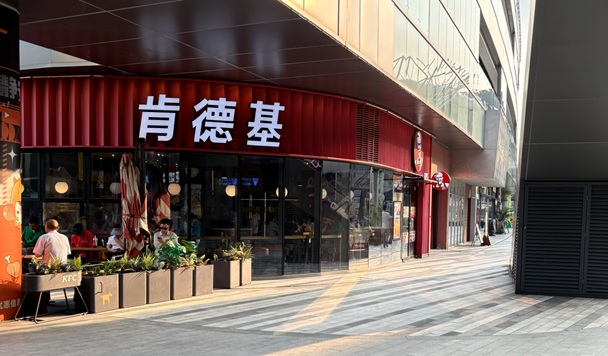
China: Seasonal Items, App-First Ordering and Subscription Tiers
China is the market where KFC has stopped resembling a Western fast food chain at all.
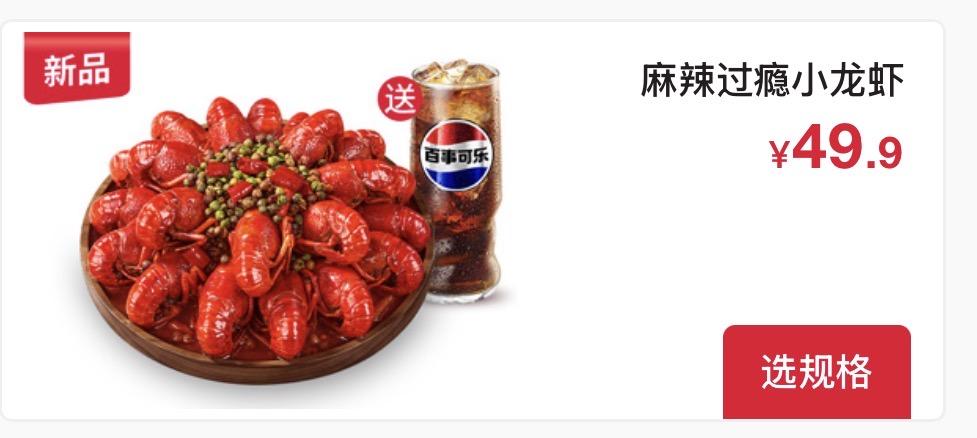
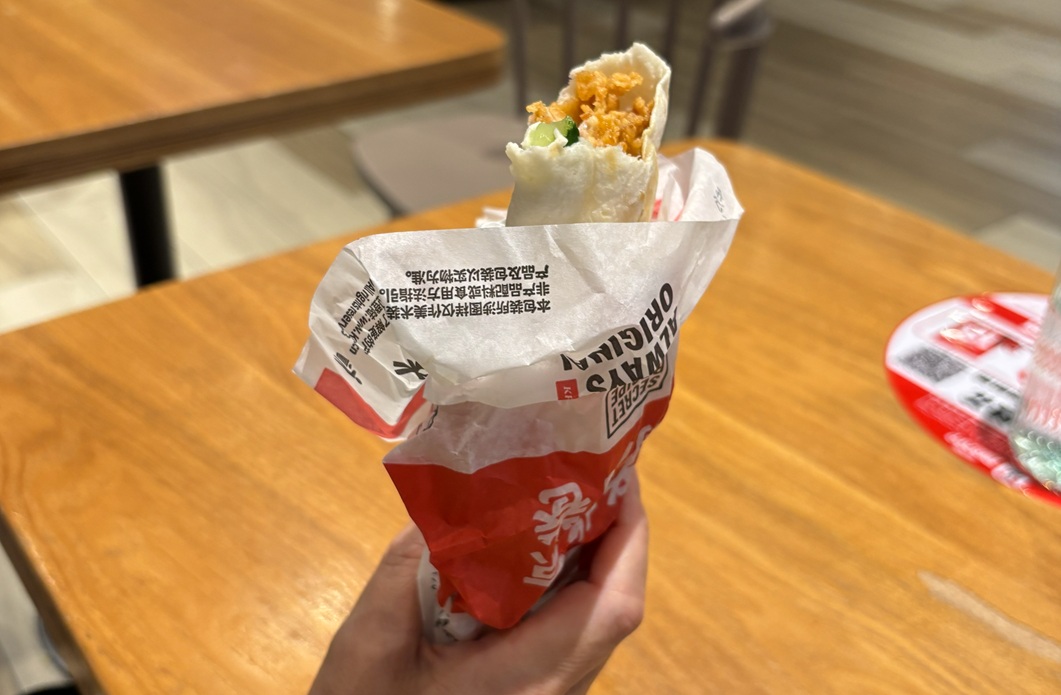
- Local-only menu: 老北京鶏肉巻, a Beijing-duck-style chicken wrap (CNY 18.5, about $2.75); a whole roast chicken in a secret marinade (weekend special CNY 26.9, about $4.00); and a seasonal mala crayfish item (CNY 49.9, about $7.40)
- What our staff paid: about CNY 12.5 for a piece of Original Recipe; CNY 19.9–23.9 (about $2.95–3.55) for a lunch value set
- How it tasted: seasoning skews sweet-spicy and hot to suit local preference, while the batter and chicken itself are close to Japan. There is no small drink size — medium and large only
- Voice from our staff: “In China, KFC gets used exactly the way McDonald’s does — ‘KFC today, or Mickey D’s?’ But the new crayfish item surprised me. You come to KFC and there’s crayfish, seriously.”
- Bottom line: the ordering layer, the coffee business and a paid membership tier are all localized alongside the menu. Digital convenience is not a channel here; it is the format.
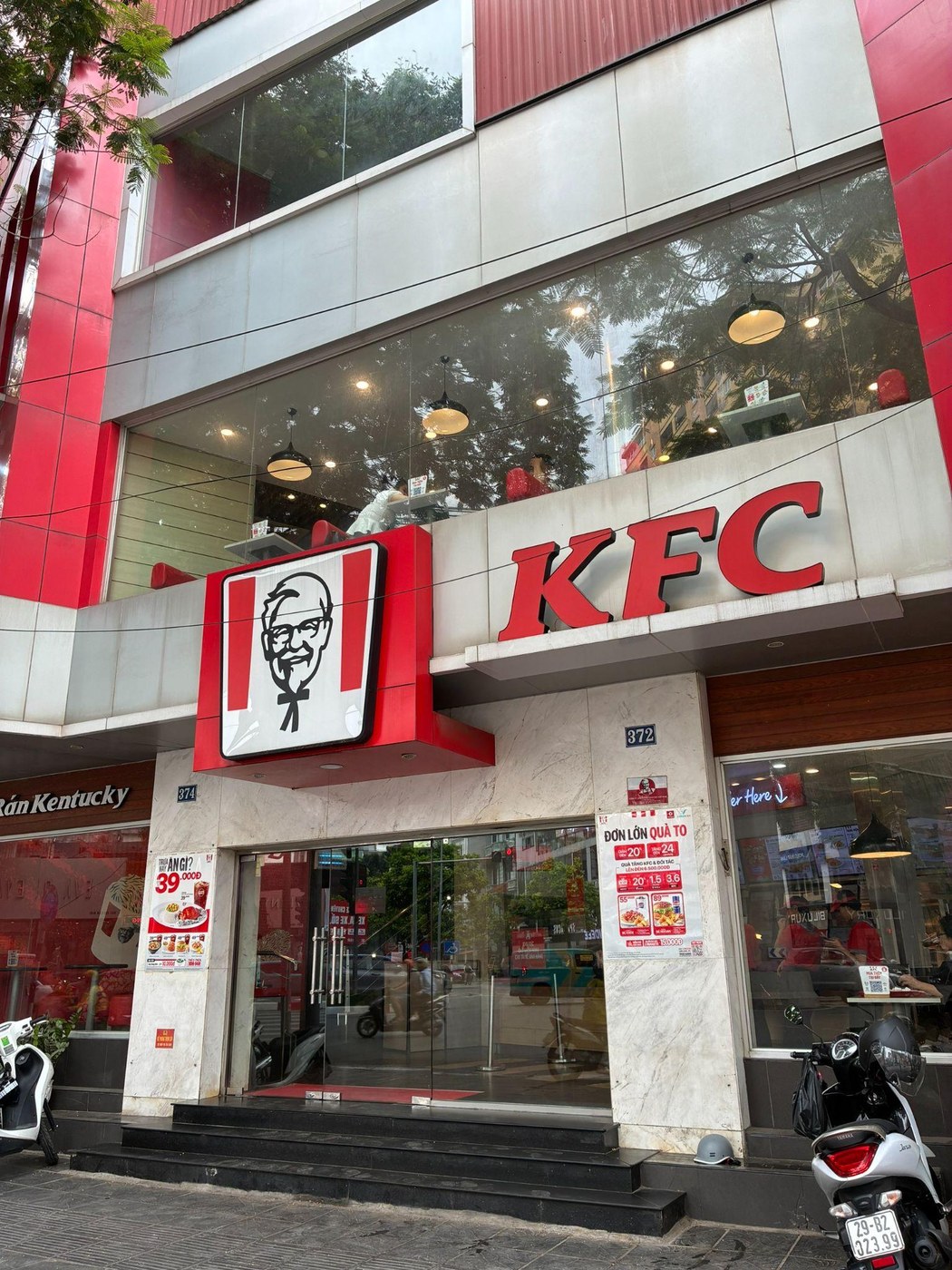
Vietnam: Rice-and-Soup Meal Structure and a De-Spiced Core Product
Vietnam delivered the cheapest meal in our entire survey, and the clearest example of a brand trading its signature flavor for local fit.
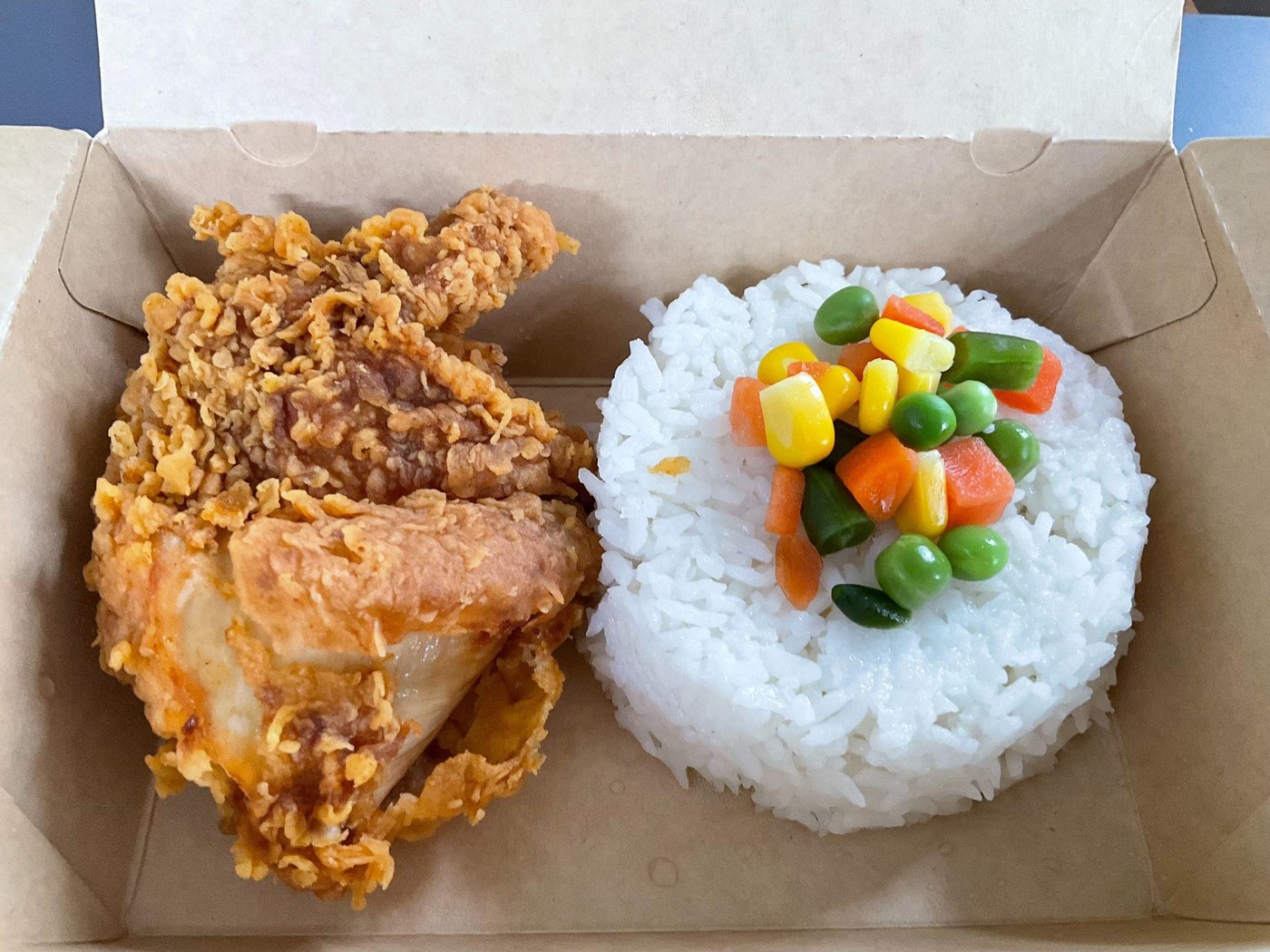
- Local-only menu: Cơm gà rán, fried chicken with rice (VND 49,000, about $1.90); Phi-lê Gà Quay, a spit-roasted chicken fillet
- What our staff paid: about $1.90 for chicken and rice. The large combo — two burgers plus four pieces of chicken — carries a Vietnamese name that translates as “stuffed-full combo”
- How it tasted: well seasoned, but with zero trace of the signature KFC spice profile our colleague knows from Japan. The plain fried chicken appears to skip the proprietary spice blend deliberately
- Voice from our staff: “You can eat the fried chicken, but if you came here specifically wanting that KFC taste, it isn’t going to deliver.”
- Bottom line: rice comes as standard, and so does seaweed soup, because many Vietnamese diners expect soup with a rice meal. When you cut your signature attribute to fit a market, decide in advance which customer you are willing to disappoint.
Thailand: Nationwide Reach and Sweet-Chili-First Flavoring
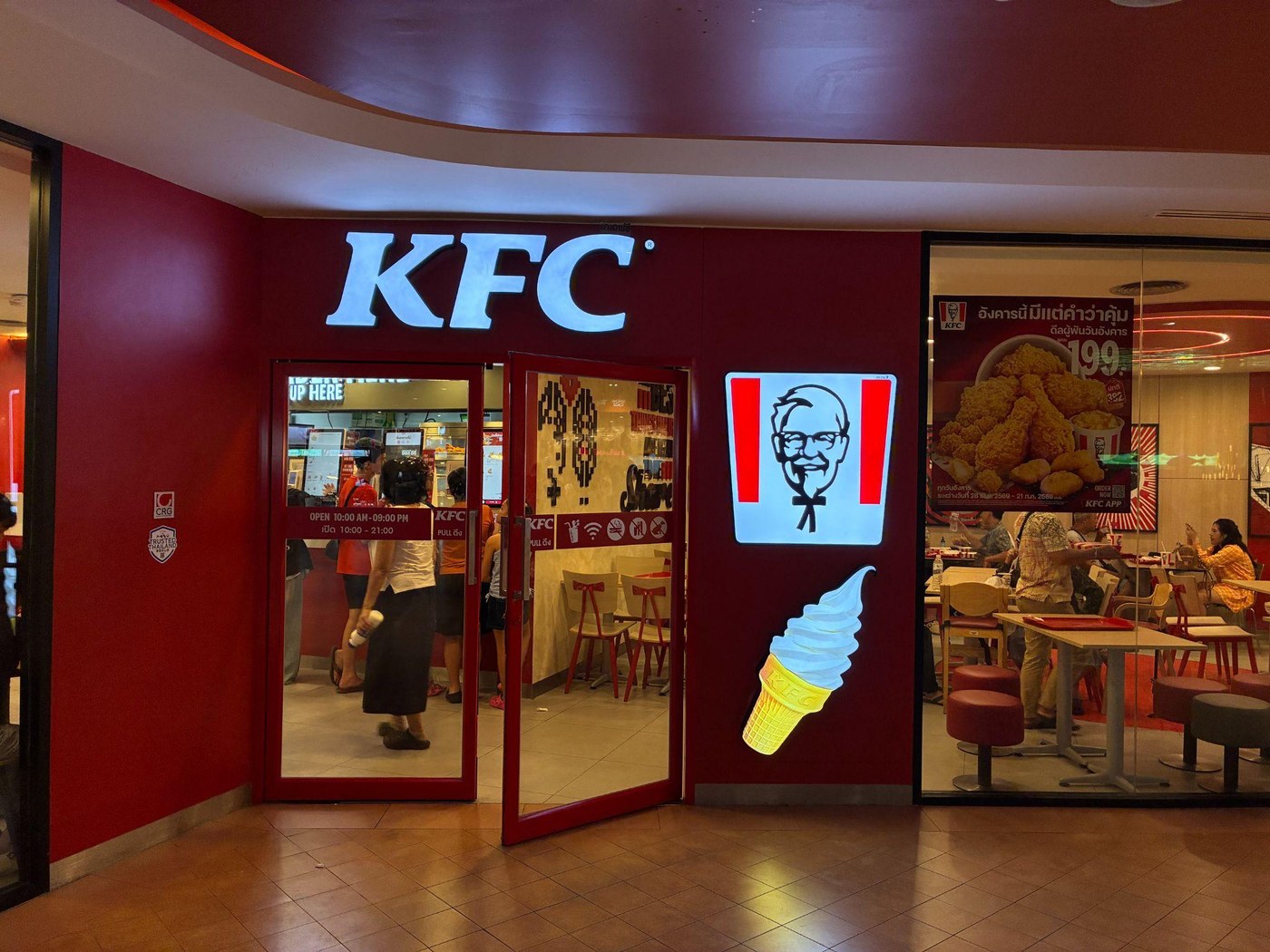
Thailand is the market where KFC’s distribution beats the obvious benchmark outright.
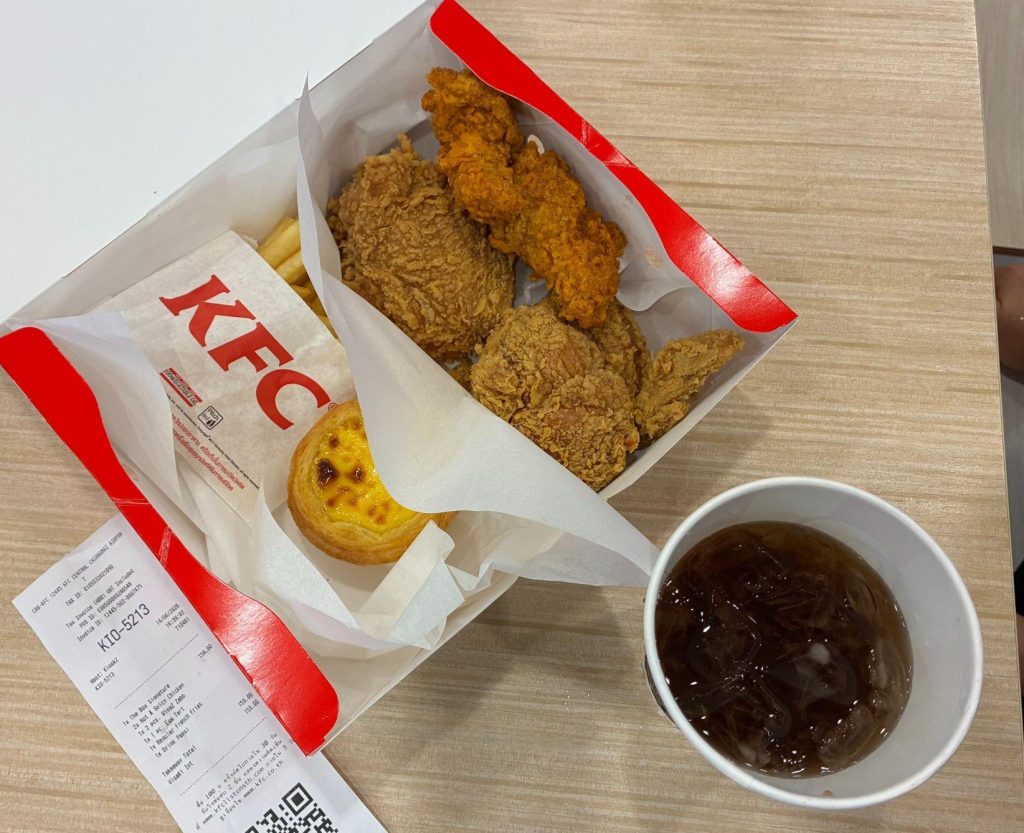
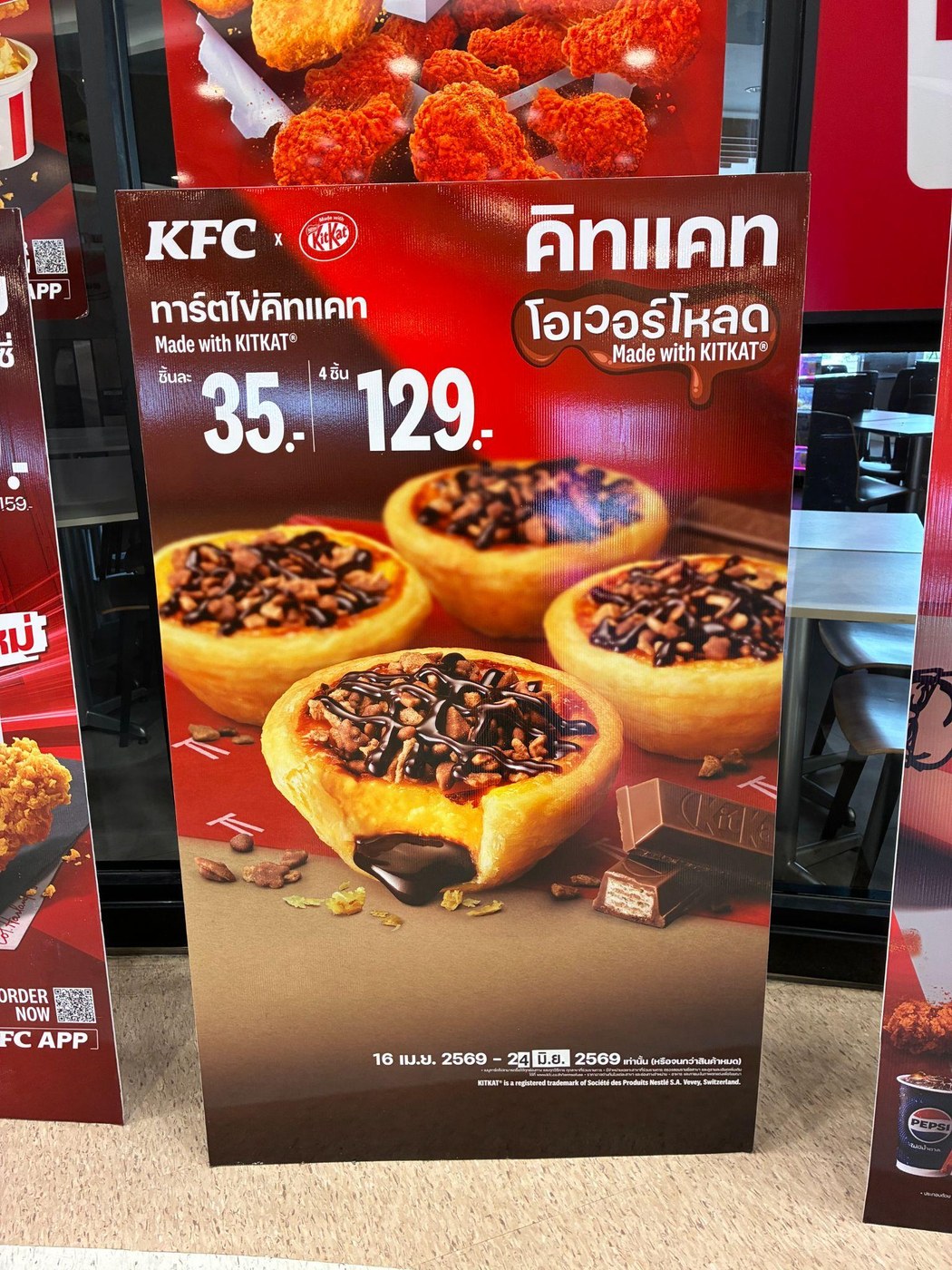
- Local-only menu: The Box Signature — two chili-sauce and two Original pieces with fries, a drink and an egg tart (THB 159, about $4.80); an egg tart containing KitKat chocolate; the Buddy Baguette (THB 199, about $6.00)
- What our staff paid: about $4.30 for a standard set. For context, a bowl of local noodles runs THB 40 (about $1.20), so KFC feels three to four times the price of everyday food
- How it tasted: sweet-chili spice leads the menu. Almost nobody was ordering burgers; rice sets dominate. Desserts — egg tarts, soft serve — are unusually well developed
- Voice from our staff: “Rice, tarts and ice cream all lined up — it really has captured Thai tastes. What I find slightly strange is that it costs three or four times an average Thai meal and it’s still packed with families and young people.”
- Bottom line: KFC reached all 77 Thai provinces in March 2026 with its first store in Mae Hong Son, and operates roughly 1,226 outlets nationwide — far more than McDonald’s. Small-footprint store formats are a market-entry capability in their own right.
Cambodia: Small Footprint, Careful Execution and Broth-Cooked Rice
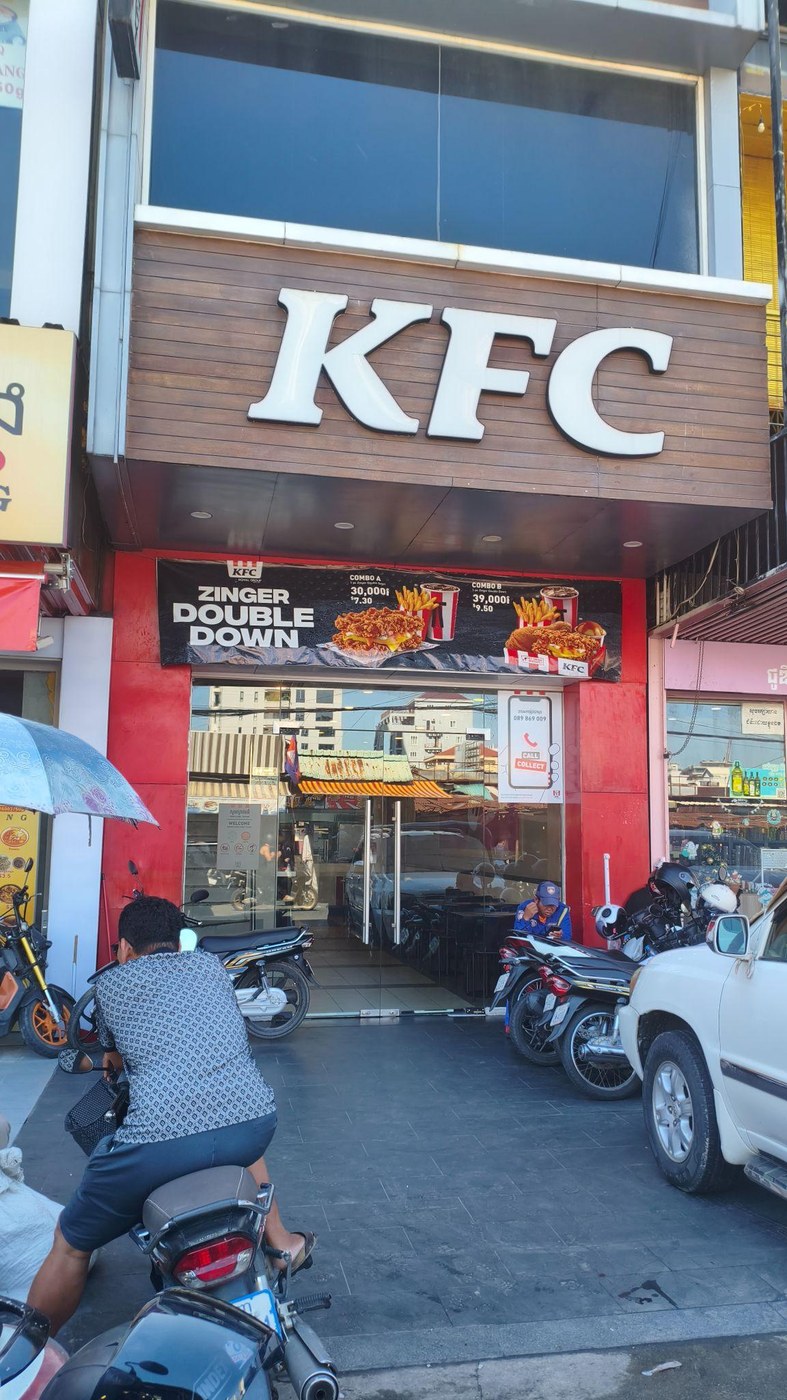
Cambodia was our smallest market by store count and one of the most detail-obsessed by execution.
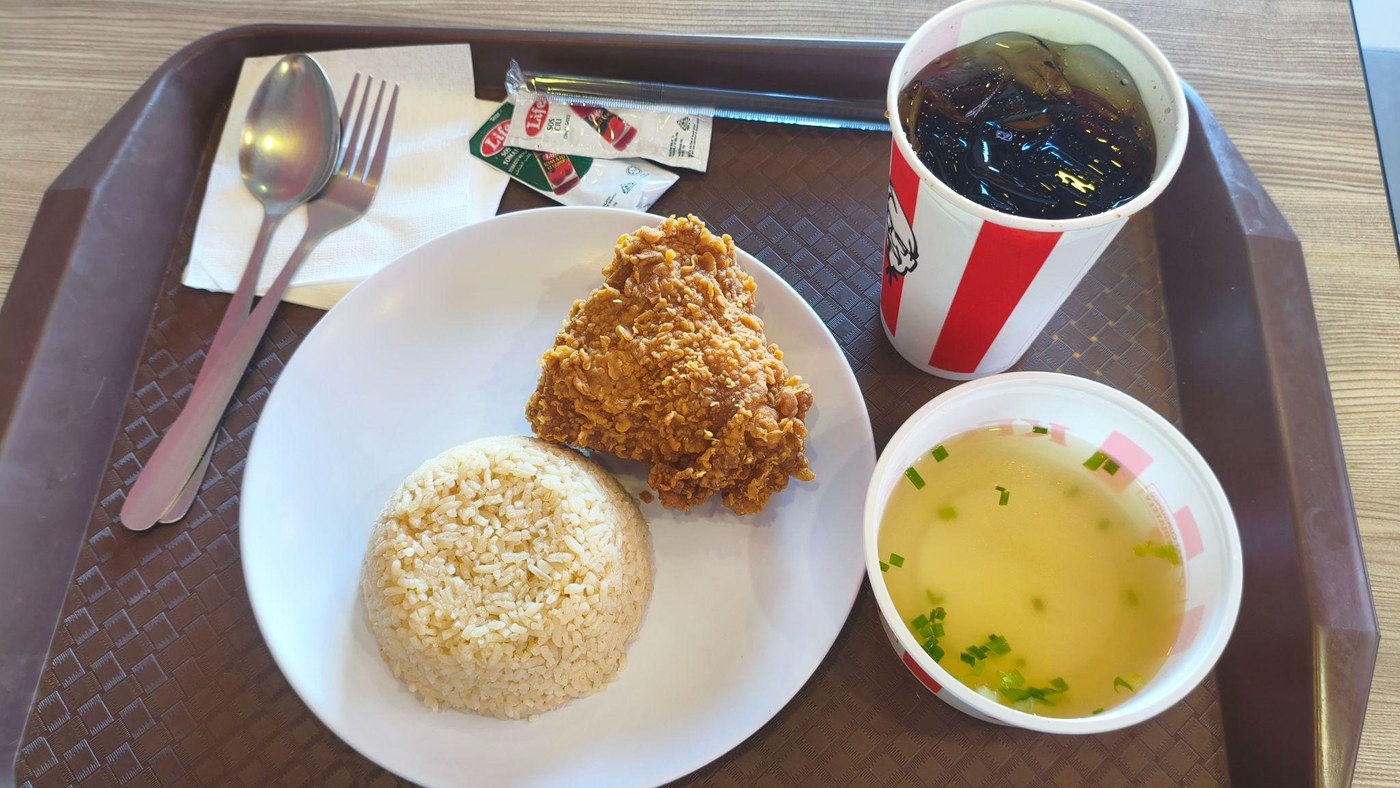
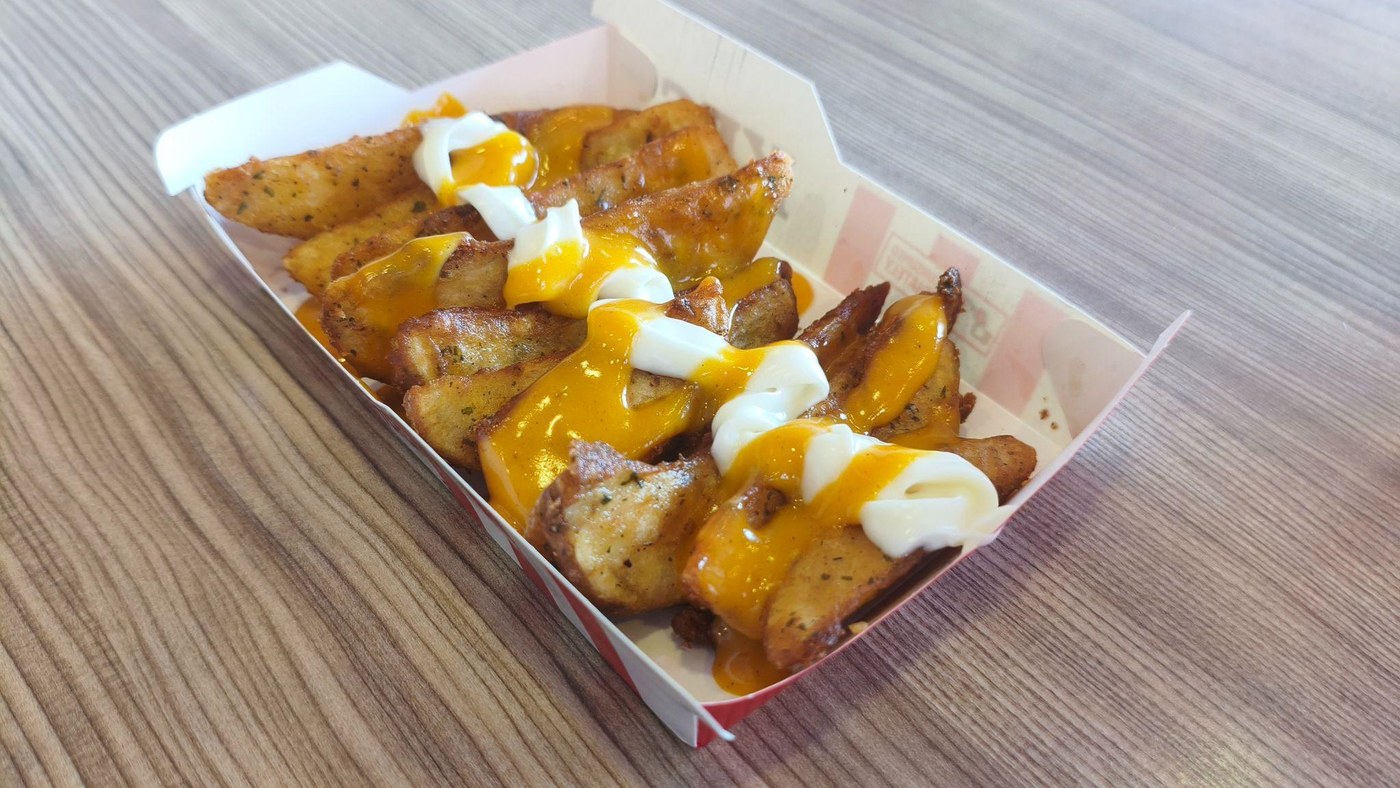
- Local-only menu: 1-pc Rice Plate — Original Recipe chicken with rice and consommé soup ($3.70); cheese-topped fries ($2.75)
- What our staff paid: $1.99 for a single piece of Original Recipe — Cambodia prices in US dollars directly. Local food runs about $2 a meal, so KFC feels expensive — though it is priced level with Burger King
- How it tasted: seasoning slightly heavy. Original and Spicy are both available and the Spicy is genuinely hot. Everything arrived freshly made, with excellent texture
- Voice from our staff: “The first time I ordered the rice set, the rice had (I’m fairly sure) been cooked in chicken broth — you could feel the care. Personally, though, I’d have preferred plain white rice.”
- Bottom line: Cambodia has just 14 stores, the first opened in 2008. Note that a thoughtful upgrade — broth-cooked rice — was not what our local colleague actually wanted. Care is not the same thing as fit.
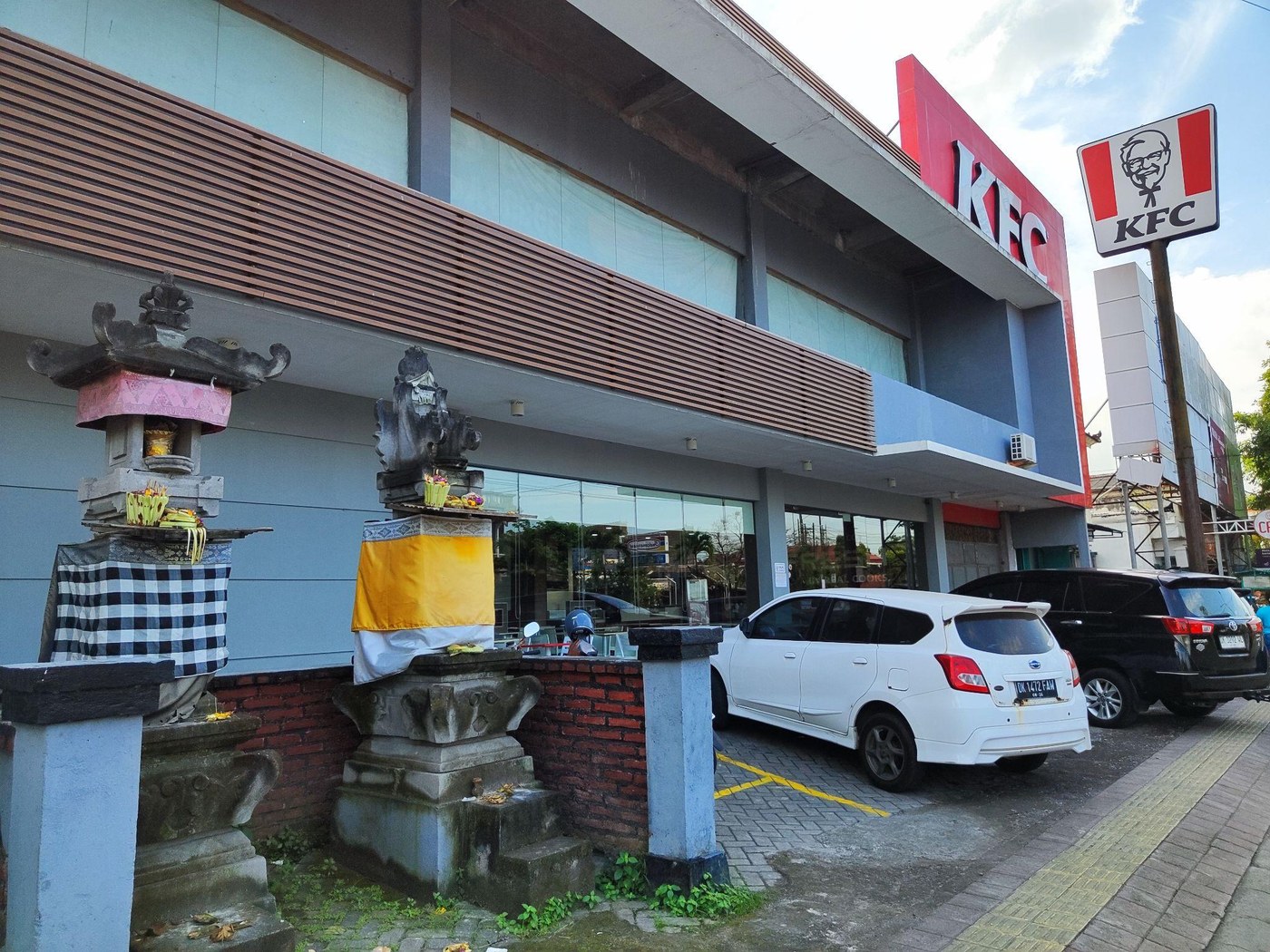
Indonesia: Rice-First Eating Culture and Visible Halal Compliance
Indonesia showed the deepest menu localization of any market we visited, and the most visible religious compliance.
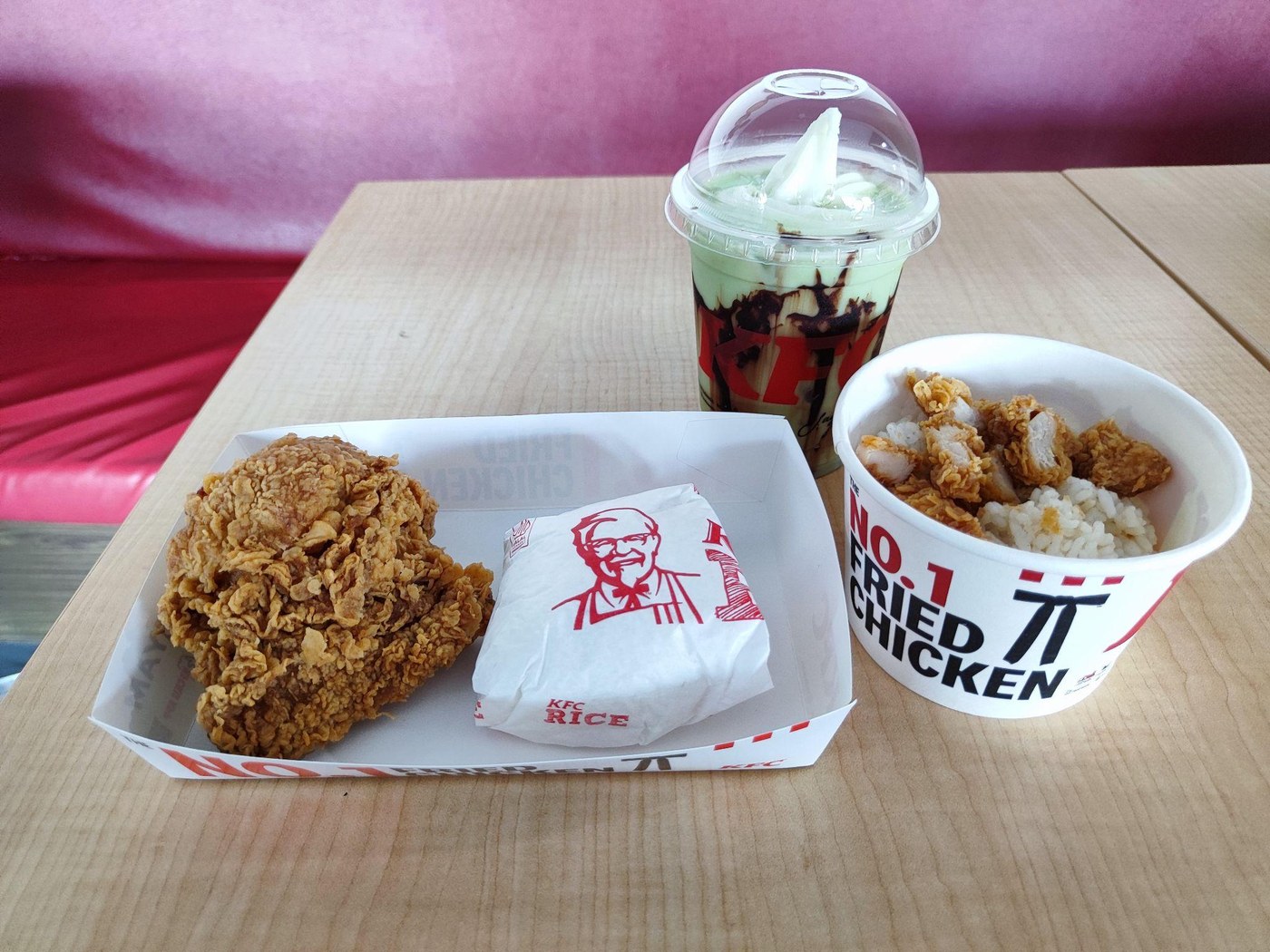
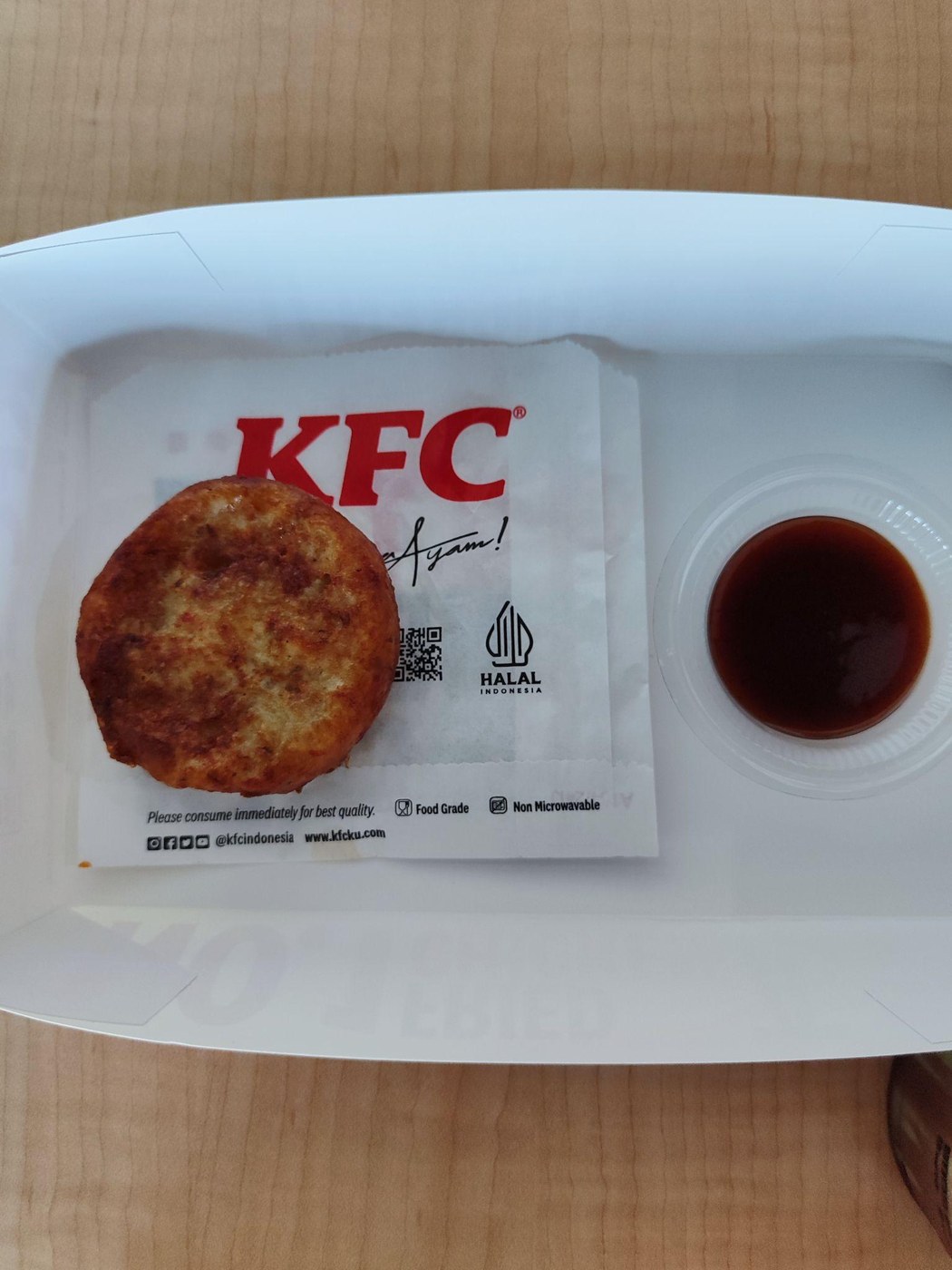
- Local-only menu: Nasi Uduk, rice cooked with herbs and coconut milk (about $1.10); Perkedel, an Indonesian-style croquette (about $0.55); Sup Tahu Bakso, tofu soup with meatballs (about $0.80)
- What our staff paid: about $1.20 for a piece of fried chicken; about $2.15 for the Super Big 1 set of rice, chicken and cola
- How it tasted: Original is close to Japan; Crispy is a little spicier. Chicken sauces run to salted egg mayo and Korean-style BBQ, tracking local tastes and trends
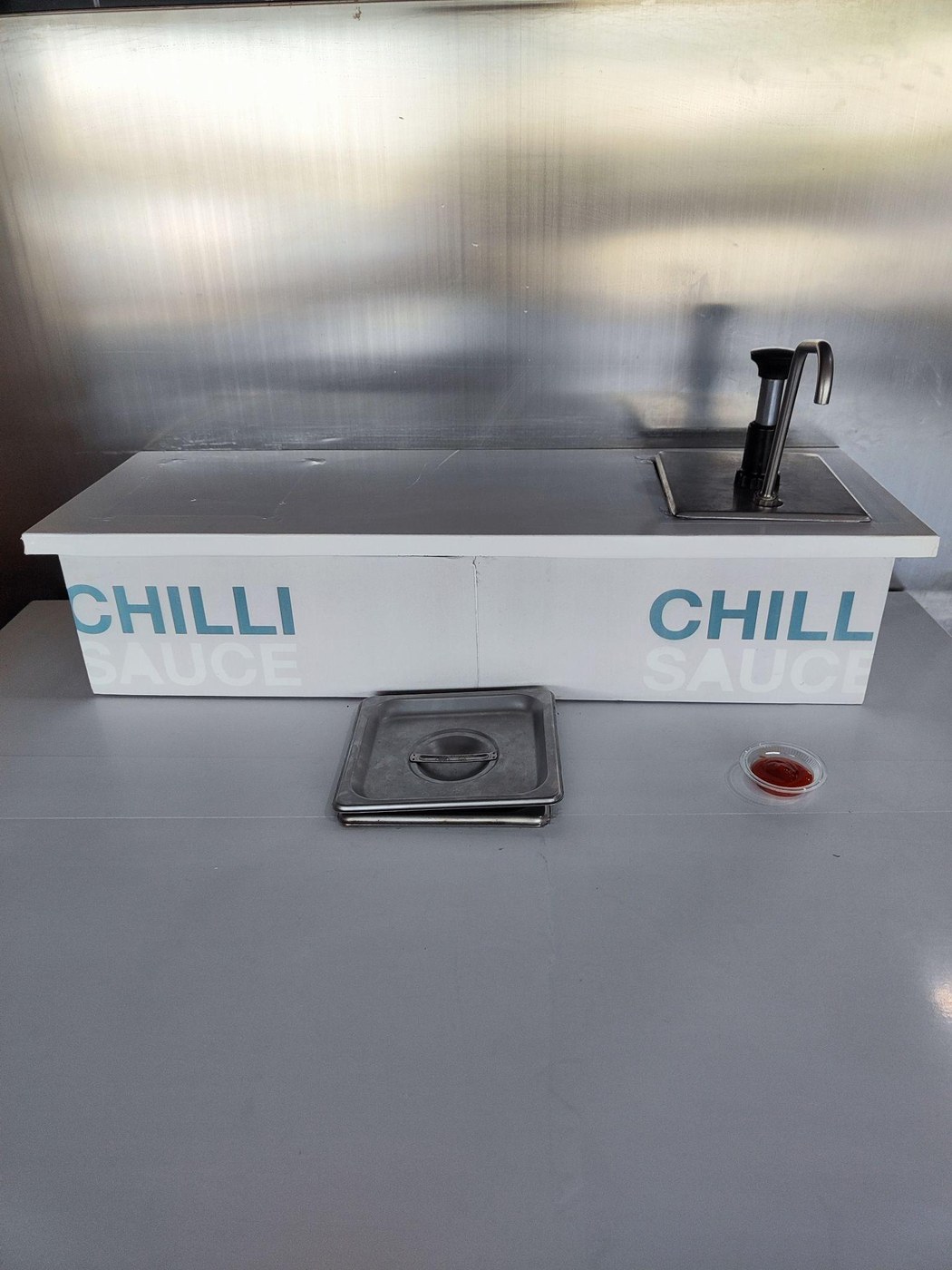
- Voice from our staff: “Rice is essential — without rice it doesn’t feel like a meal. The real pleasure is loading up on sambal and eating spicy chicken together with the rice.”
- Bottom line: sambal occupies the position soy sauce holds in Japan, dispensed free-flow. Halal marks sit on the packaging, and one Bali store has a Hindu shrine on its grounds reflecting the owner’s faith. Religious and dietary infrastructure is part of the store, not a footnote.
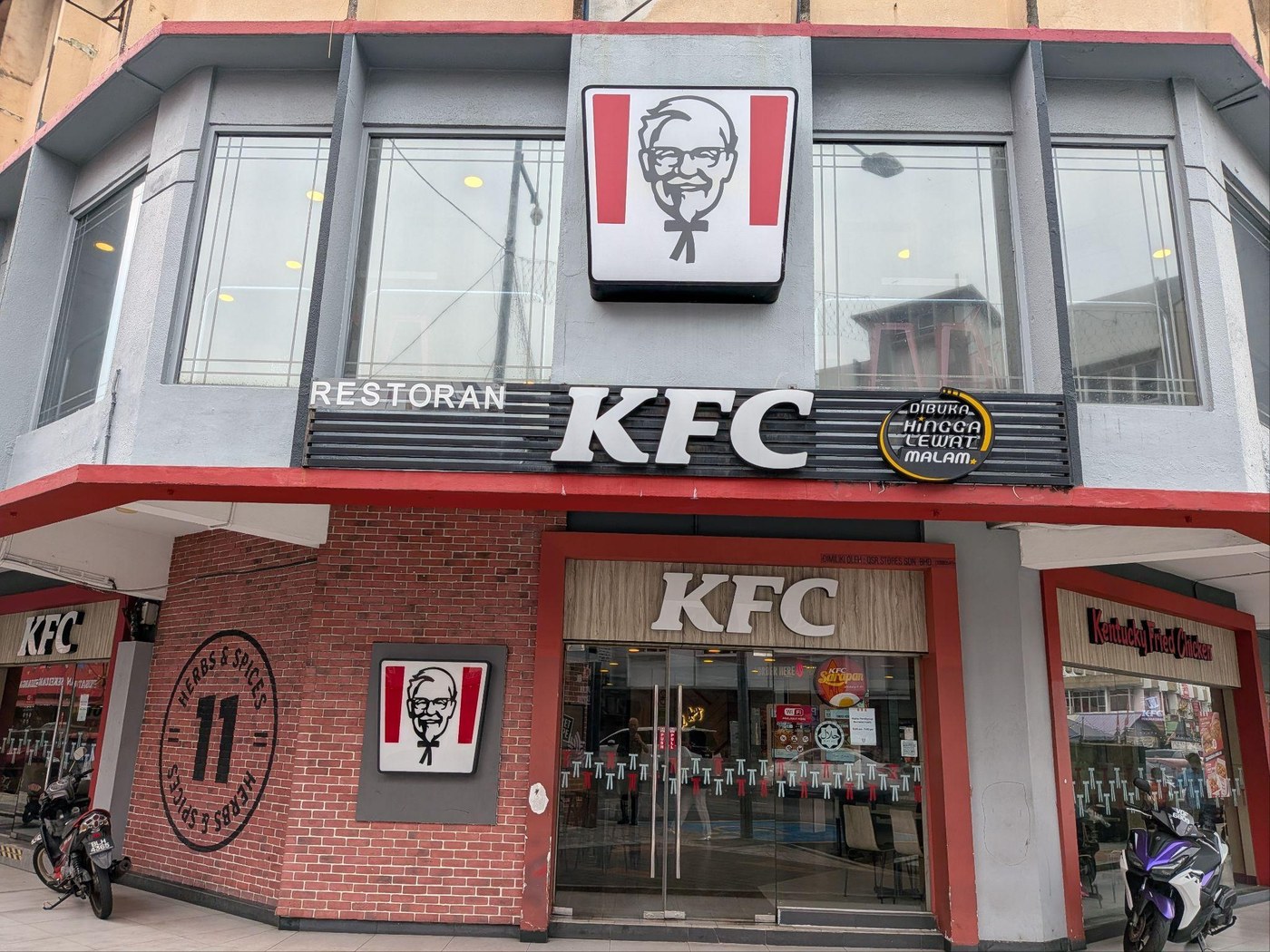
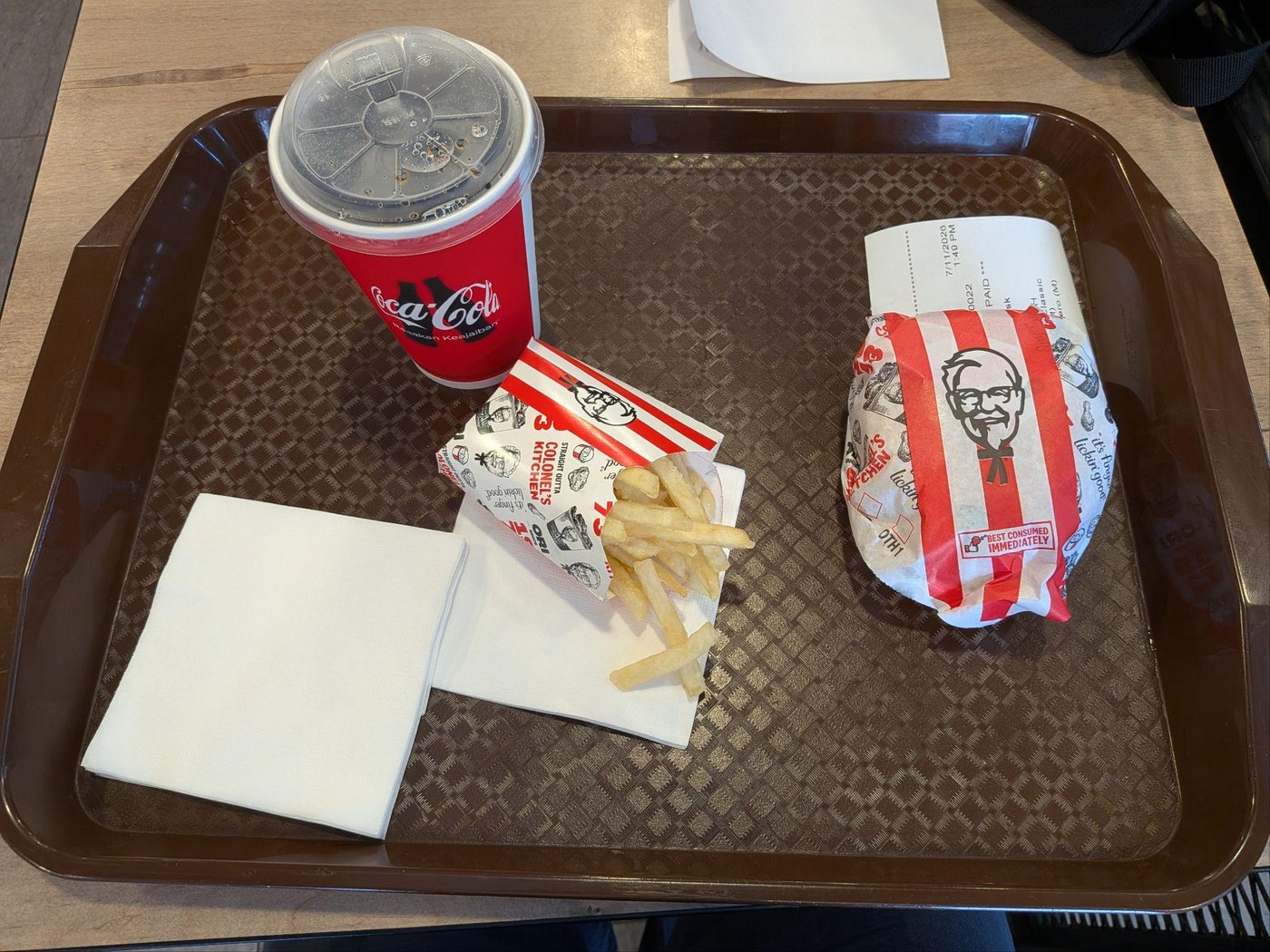
Malaysia: Multi-Ethnic Flavor Integration and Ubiquitous Distribution
Malaysia’s menu reads like the country’s demographics, and our colleague there gave us the harshest verdict in the survey.
- Local-only menu: Nasi Lemak combo — the national dish of chicken, rice and fried egg, rebuilt as a KFC set (about $3.90–4.40); Cereal Cheezy Fries; Portuguese-style egg tart
- What our staff paid: RM 14.99 (about $3.70) for a Crispy Filet Burger set
- How it tasted: frankly, not great. “Bland.” “The chicken was dry.” We are reporting it as given, because that is also the local reality
- Voice from our staff: “Honestly the texture was a bit dry and underwhelming. But there seems to be a KFC in every town. A friend said the rural town they visited recently had no McDonald’s but did have a KFC. Quirks aside, it’s clearly a nationwide staple.”
- Bottom line: Chinese, Indian and Malay flavors coexist on one menu board, and kiosks push app registration relentlessly. Note the split verdict — weak product experience alongside strong distribution and habit. Category default status can survive mediocre execution far longer than most brands assume.
India: Vegetarian Defaults, Halal Coverage and Infrastructure-Driven Surprises
India required the most structural adaptation of any market in our survey — and produced the most memorable complaint.
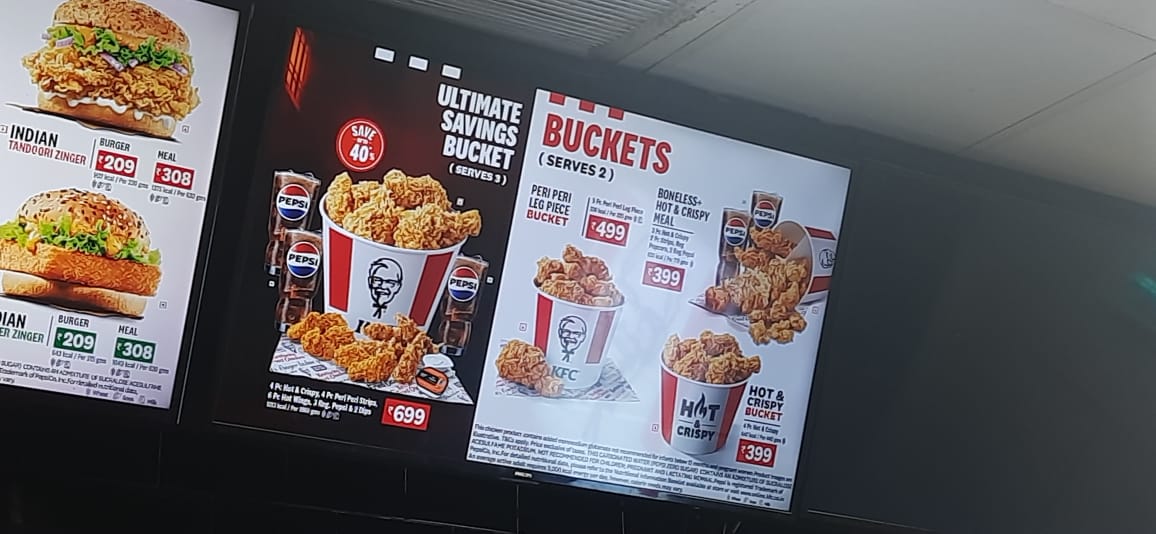
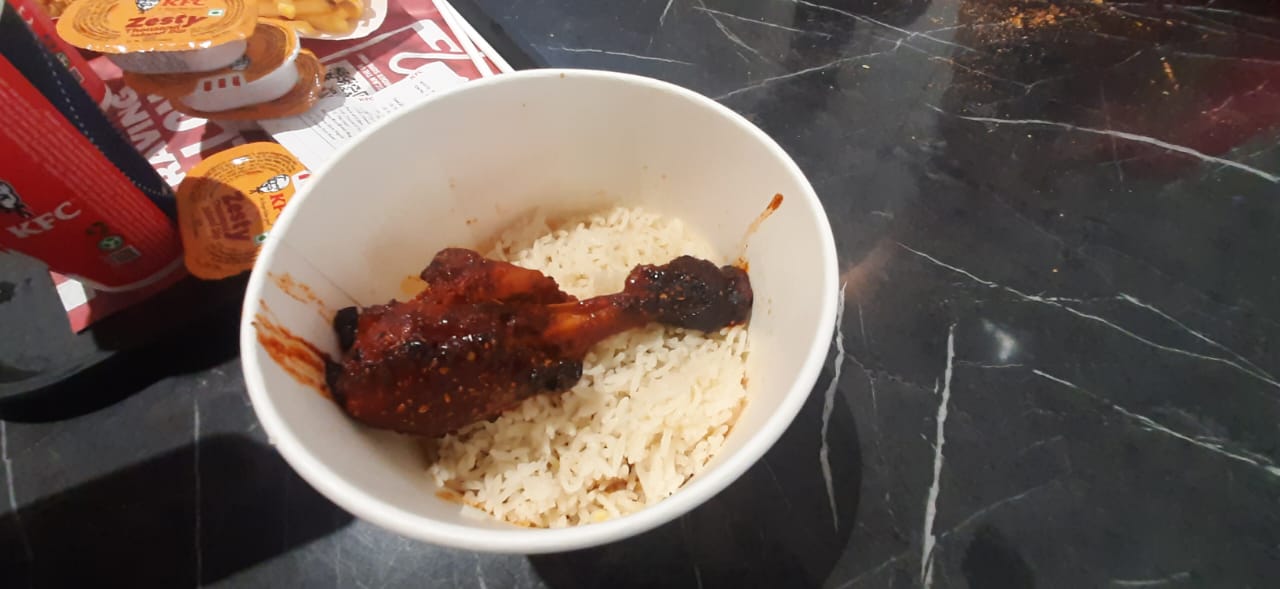
- Local-only menu: Veg Zinger Burger, with a vegetable croquette in place of chicken (about $2.00); Shawarma, the Middle Eastern wrap (about $1.90); Smokey Red Chicken Rice Bowl — spiced rice, curry sauce and grilled chicken (about $2.00)
- What our staff paid: INR 199 (about $2.10) for a Zinger burger alone. Local street food fills you up for INR 50 (about $0.52), which puts KFC firmly in the premium bracket
- How it tasted: spicier and saltier than Japan overall, with a very crunchy coating. No biscuits and no coleslaw; fries come with an optional peri-peri spice dusting
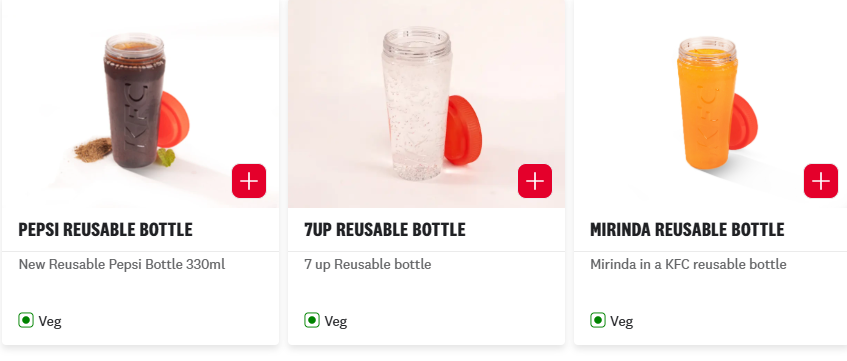
- Voice from our staff: “The biggest shock was paying good money and being handed a lukewarm cola. Indian fast food doesn’t put ice in drinks. In areas with frequent power cuts, you end up drinking warm soda in a warm room.”
- Bottom line: every store carries vegetarian options, halal compliance is thorough, and sustainability shows up in paperless e-receipts and reusable drink containers. Also note the cola: local infrastructure quietly redefines your product experience whether you planned for it or not.
United Kingdom: Mild Seasoning and Distinctly British Side Dishes
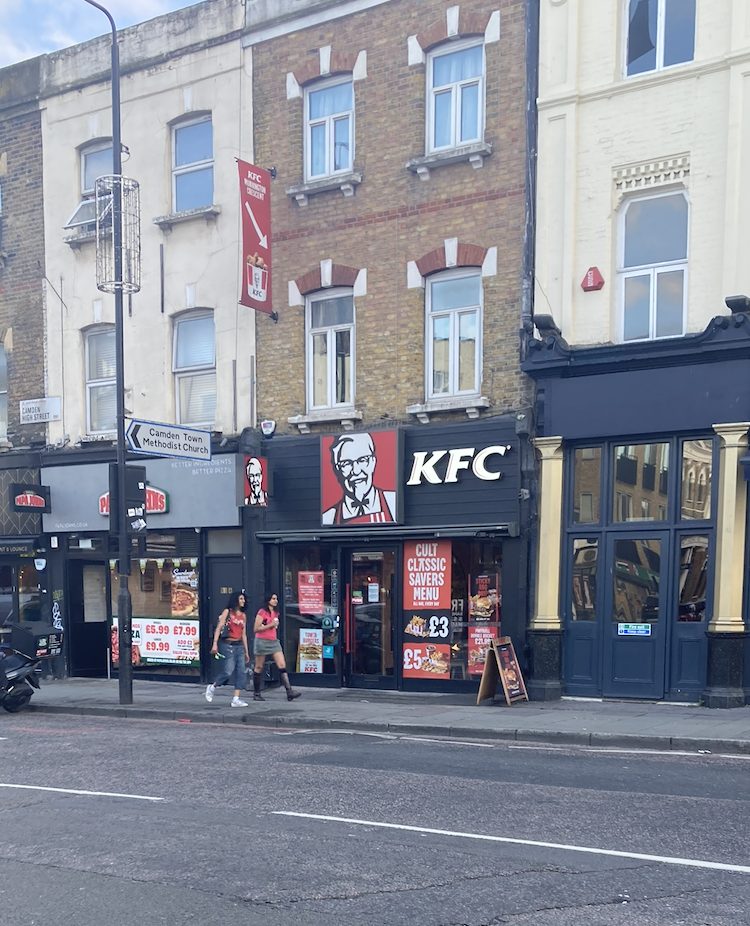
The UK was our only Western market, and the most useful control in the set: it shows that “localization” is not a synonym for “Asia.”
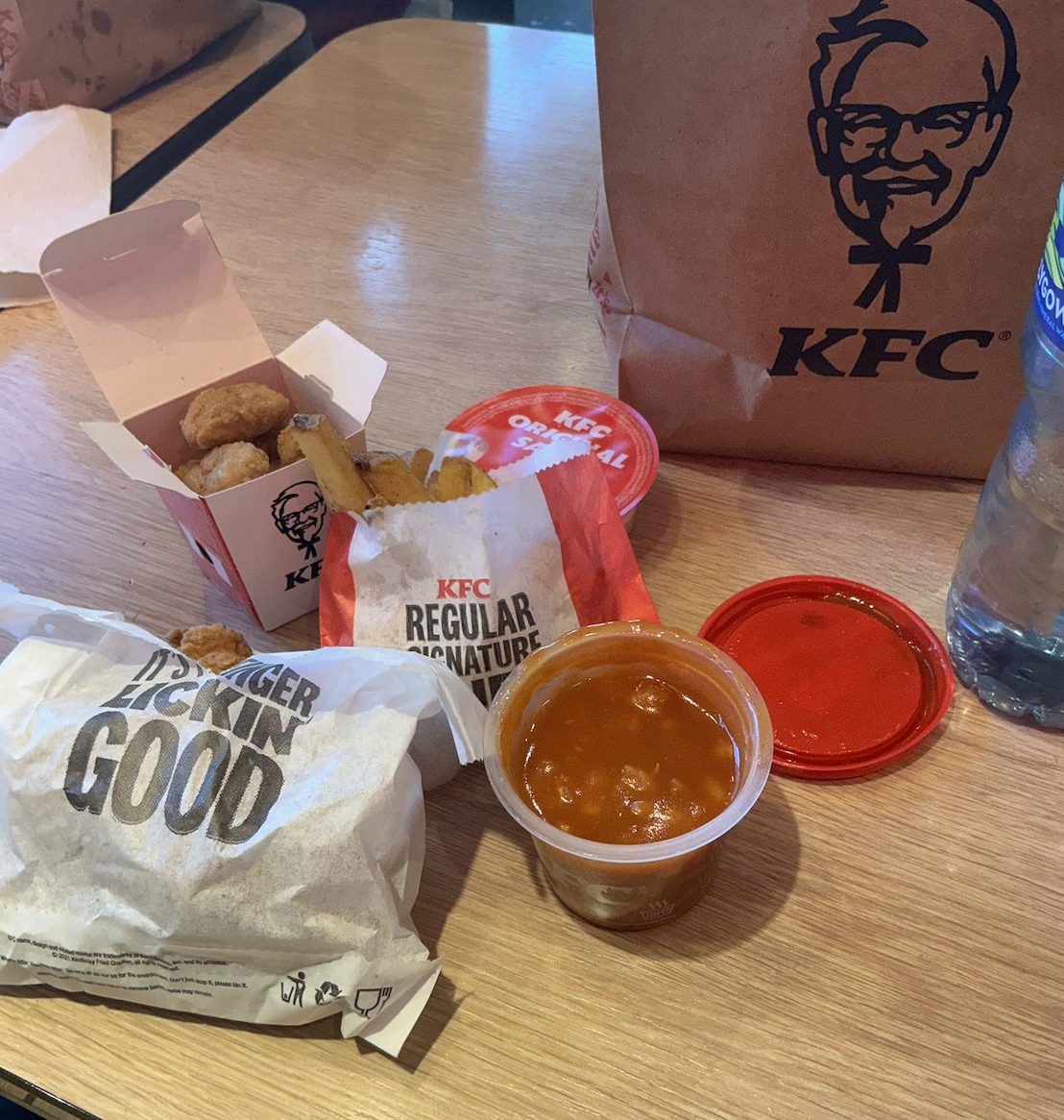
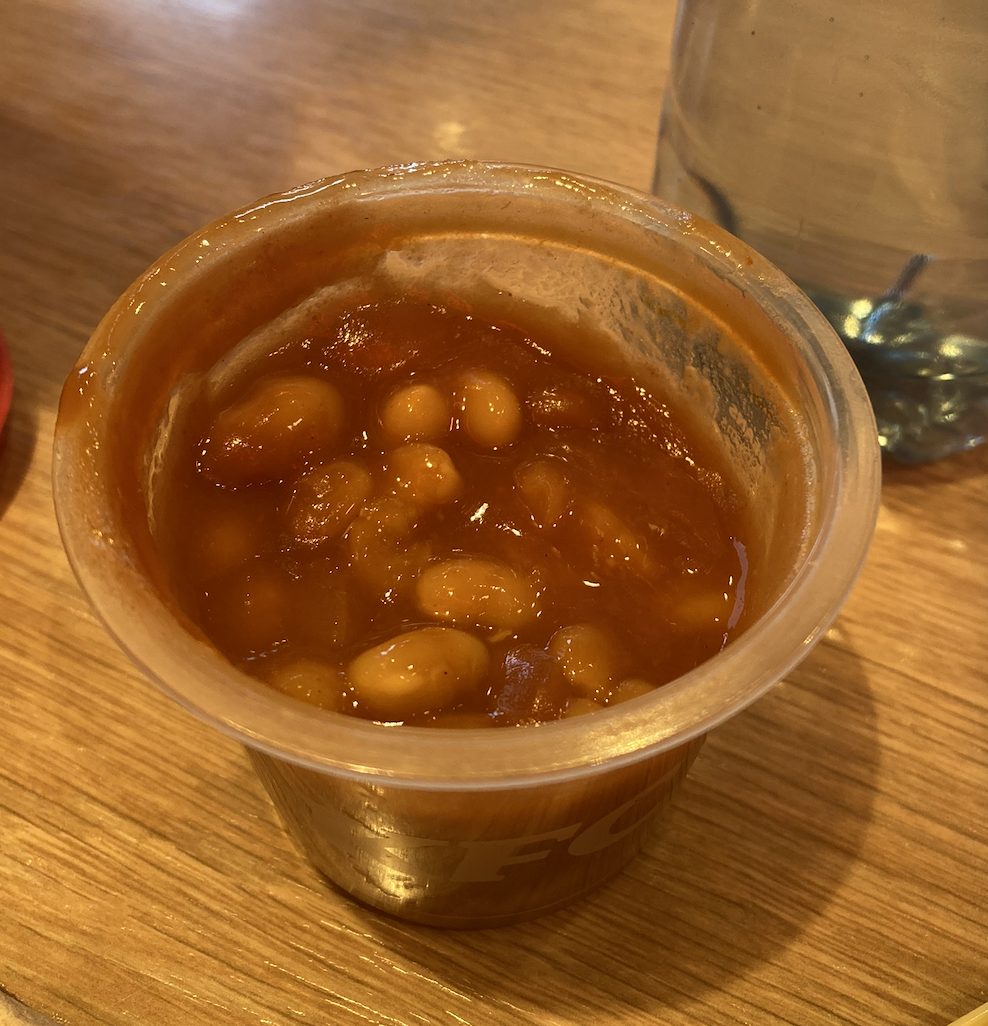
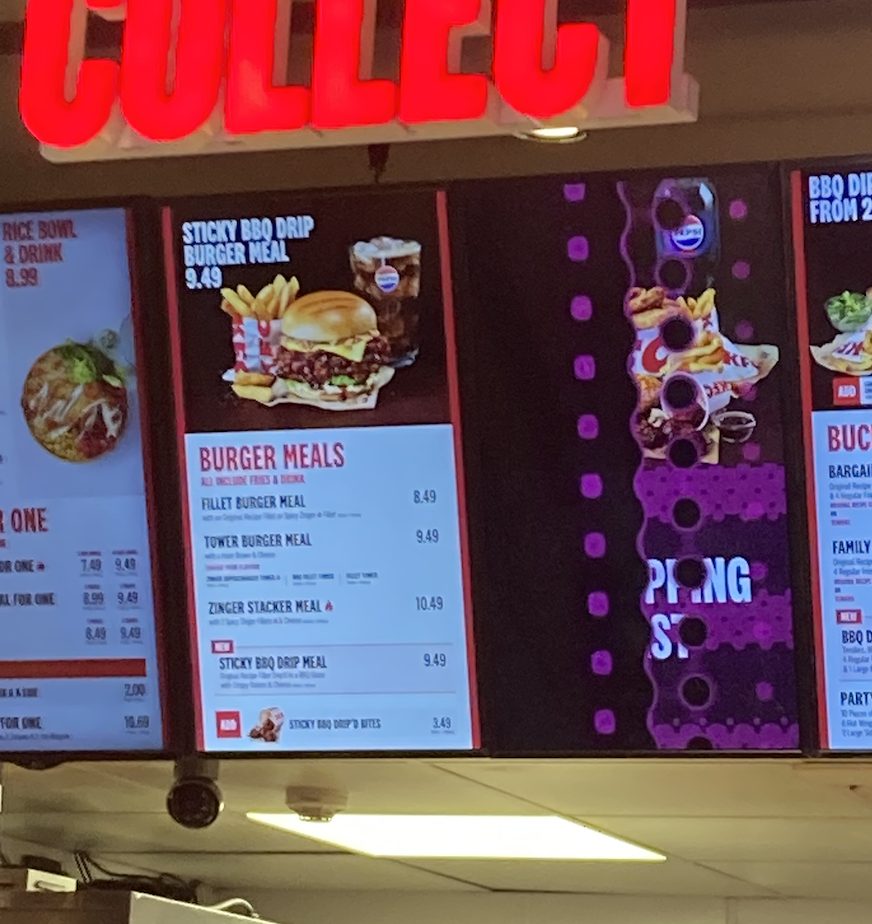
- Local-only menu: Boneless Banquet — three pieces of fried chicken, mini nuggets, beans, fries, sauce and a drink (GBP 10.69, about $14.45); Original Ranch Rice Bowl; popcorn chicken
- What our staff paid: about $14.45 for the Banquet. In a country where a meal out averages GBP 14 (about $19) that is not outrageous, but it feels expensive relative to the portion
- How it tasted: lightly seasoned overall, in line with a culture of adding your own salt and sauce at the table. The coating is less aggressively crunchy. Baked beans and gravy on the side are unmistakably British. There are no biscuits — cookies instead
- Voice from our staff: “It does make you appreciate Japanese food. Plenty of choice, which is a plus, but filling up cheaply looks hard. If you’re going anyway, try something you can’t get in Japan.”
- Bottom line: lettuce sits under the meat rather than on top of it, reportedly because many British diners dislike visible vegetables. Halal-certified and vegan-capable stores (Quorn plant-based burgers) both exist. Even inside the West, portioning, seasoning defaults and visual assembly all get rewritten.
Meal Prices Across 10 Markets: Absolute vs. Relative Cost
The same brand, the same core product, and a nearly eightfold price gap between the cheapest and most expensive markets in our survey.
| Rank | Market | The meal our colleague ordered | Price (approx. USD) | Local reference point |
|---|---|---|---|---|
| 1 | Vietnam | Cơm gà rán set | $1.90 | — |
| 2 | India | Smokey Red Chicken Rice Bowl | $2.00 | Street food meal about $0.52 |
| 3 | Indonesia | Super Big 1 (chicken, rice, cola) | $2.15 | — |
| 4 | China | Weekday lunch value set | $3.00 | — |
| 5 | South Korea | Kenchibap set | $3.65 | — |
| 6 | Cambodia | 1-pc Rice Plate | $3.70 | Local meal about $2.00 |
| 7 | Malaysia | Crispy Filet Burger set | $3.70 | — |
| 8 | Thailand | The Box Signature | $4.80 | Bowl of noodles about $1.20 |
| 9 | Taiwan | Okonomiyaki-style burger XL set | $8.45 | — |
| 10 | United Kingdom | Boneless Banquet | $14.45 | Meal out averages about $19 |
Portion sizes differ substantially — the UK, Taiwan and Thailand orders were all large sets — and the conversions are approximate. Japan sits in the middle at roughly $4.30–5.50 for a set.
Read the last column, though, and the ranking inverts. In India and Thailand, KFC costs three to four times a normal local meal; in the UK it undercuts the average meal out. Vietnam is the cheapest market in absolute terms and India the second — yet India is arguably where KFC is positioned most like a premium brand. Absolute price tells you almost nothing about how expensive you feel.
Why Rice Defines the Meal Frame in Asian Markets
Because in much of Asia the carbohydrate, not the protein, defines whether something counts as a meal — so a rice-free menu is not a lighter option, it is an incomplete one.
Our staff found rice as a standard menu item in Vietnam, Thailand, Cambodia, Indonesia and Malaysia, and as a localized bowl format in South Korea, China and India as well. That is eight of nine Asian markets in our survey.
The reasoning is cultural before it is culinary. Indonesia’s “belum makan nasi, belum makan” is the clearest formulation, but the same logic shows up in Vietnam’s soup-beside-rice convention and in Cambodia’s broth-cooked rice. Rice is the frame; fried chicken is what you put inside it.
For a Western brand, the underlying product localization question is uncomfortable and specific: what is the equivalent frame in your category, and are you selling the frame or the filling? Software vendors hit exactly this problem when a workflow that feels central in the US turns out to be a peripheral step in a Japanese or Indonesian process. The feature is fine. The frame is wrong.
Product Localization vs. Global Brand Consistency: Where to Draw the Line
Global consistency still matters, and our survey suggests the line sits at the brand’s signature attribute, not at the menu. KFC changed rice, sauces, names, desserts, app flows and pricing tiers across ten markets. It did not change the Colonel, the red livery, or the promise that this is fried chicken.
That distinction is worth taking seriously, because heavy localization has a cost, and we saw it. In Vietnam our colleague could get fried chicken but not the KFC flavor they know from Japan. In Malaysia the food itself underdelivered. In Cambodia a genuinely careful upgrade landed as a mild disappointment. Adaptation is not automatically an improvement.
When Product Localization Goes Too Far
Some situations argue for holding the line rather than adapting, and it is worth naming them before you commission a product localization program.
- Your signature attribute is itself the reason customers choose you, and diluting it removes your differentiation
- Your buyers are global or expatriate rather than local, and expect consistency across markets
- You are still validating demand, and localized SKUs would multiply cost before you know what sells
- Regulatory or safety constraints make variant management genuinely risky
- You cannot yet support local-language service, in which case a localized product sets an expectation you will fail to meet
What to watch out for in the other direction: adapting the product while leaving pricing, naming, packaging visuals and the digital funnel untouched. That is the most common half-measure we see, and it is the one that reads as careless to local customers.
A 10-Point Product Localization Checklist for Your Own Product
Run this against your own product, market by market, before you commit budget. Every item comes from something one of our colleagues actually observed in 2026.
- Staple check — what is the “rice” in your category, and does your product respect it or bypass it?
- Signature attribute — name the one thing you will not change, in writing, before adaptation starts
- Naming — would your product name trigger appetite or interest in the target language, or is it a literal translation?
- Dietary and religious exclusion — is there any group your product structurally cannot serve, and is that a decision or an accident?
- Certification — do required marks (halal, allergen, local labeling) appear where local customers look for them?
- Relative price — what does your product cost as a multiple of an everyday local equivalent, not in USD?
- Portion and packaging — does the size and presentation match local expectations, or just your home market’s?
- Visual assembly — does the product look right locally? The UK moved the lettuce under the meat for a reason
- Digital layer — are ordering, payment, loyalty and support localized to the same depth as the product?
- Infrastructure reality — what will local conditions do to your product that you did not plan for? Somebody paid full price for a warm cola
If you cannot answer six of these ten for a target market, you are working from desk research rather than from the market.
How We Conducted This Research — And How You Can Run Your Own
This report exists because we did not have to hire anyone to produce it. The Japan-based language services company AtGlobal, Ltd. has Japanese staff living in roughly 60 countries, and ten of them ate a meal and wrote up what they saw.
That is the same capability we sell, and it is worth being precise about what it is and is not. Best suited for teams that need to know how a product, message or campaign will actually land in a specific Asian market. Particularly strong at the observation layer that neither desk research nor machine translation can reach: what is on the menu board, what locals order, what the price feels like, what the app makes you do.
Over 20 years, more than 1,000 companies have worked with AtGlobal across translation and interpretation, multilingual marketing, market research and cultural intelligence training. If you are not sure where to start, in-market research is usually the cheapest first step in a product localization program, because it changes what you localize rather than just how well.
Entering Asia: Start with Observation, Not Translation
Start with observation, not translation. Commission a short in-market read on two or three target countries — what competitors sell, how your category is framed, what your relative price will feel like — and let the findings set the localization scope.
Our published research case studies show the shape this takes in practice. In one recent multilingual website project, giving the local reviewer the market context up front cut review cycles from three rounds to one, because the first draft was already aimed at the right frame.
If Your Product Underperforms in Asia: Audit the Surrounding Experience
Audit the gap between your product localization and everything around it. In our experience the failure is rarely the translation itself; it is a localized product sitting inside an un-localized name, price ladder, visual system or support flow.
Our companion field guide on how consumers across eight Asian markets actually use social media covers the channel side of the same problem.
Planning an Asia Rollout: What to Check Market by Market
Tell us the markets you are targeting and what you are trying to sell, and we will tell you what we would need to check on the ground. Contact AtGlobal to discuss an in-market read for your category.
FAQ: Product Localization for Asian Markets
- How much does product localization for an Asian market typically cost?
-
It depends far more on scope than on language. Document and website translation is usually priced per word or per page and is the smallest line item. In-market research, transcreated naming, local visual assets and localized digital funnels each cost more than the translation itself, because they require people in the market rather than at a desk. The variables that move the number most are how many markets you run in parallel, whether you need native review at every stage, and whether you are adapting an existing product or designing variants. Running two markets sequentially is almost always cheaper — and usually produces clearer learnings.
- Which market should we enter first in Asia?
-
Choose on the basis of how little you have to change, not on market size. Our survey is a useful proxy: markets where your product’s frame already fits — the equivalent of Taiwan’s appetite for Japanese flavor profiles — need far less adaptation than markets with structural requirements like India’s vegetarian baseline or Indonesia’s halal certification. A smaller market you can serve properly usually outperforms a larger one you serve approximately. Where two candidates look equally viable, pick the one where you can staff local-language support first.
- Is machine translation good enough for market entry?
-
It is good enough for internal comprehension and increasingly good for high-volume, low-stakes content. It is not good enough for anything that has to create appetite or trust. Neither “stuffed-full combo” nor “Zinger” is a translation of anything — both were written for the local language. Machine translation optimizes for accuracy; naming, campaign copy and product positioning optimize for effect, which is a different task. The practical split we recommend: machine translation with human post-editing for volume, and human transcreation for anything customer-facing that carries the brand.
- Product localization vs. standardization: which performs better?
-
Neither wins outright, and framing it as a binary is what causes the damage. The pattern across our ten markets is a fixed core with a localized periphery: the brand’s signature attribute and visual identity hold, while format, flavor, pricing tier, naming and digital experience adapt. The practical test is whether a given change strengthens the reason customers chose you or dilutes it. If you cannot say which, do not make the change yet.
- What are the biggest risks of over-localizing a product?
-
Three, in order of how often we see them. First, losing the differentiator — Vietnam’s de-spiced chicken is a legitimate business decision, but it does mean a customer who came for the signature taste leaves unsatisfied. Second, cost and complexity multiplying across SKUs before demand is proven. Third, inconsistency, where a heavily localized product sits inside global pricing and packaging and the mismatch reads as carelessness. All three are manageable, but only if you decide up front what is fixed.
- Does any of this apply to B2B, not just consumer products?
-
Yes, and the frame problem is often sharper in B2B. The rice question — what makes something count as a complete offering locally — shows up as procurement expectations, documentation depth, support-hours assumptions and who has to sign off. A software product that ships without Japanese-language documentation and local-hours support is the B2B equivalent of serving fried chicken with no rice: technically complete, locally incomplete.
- How do we know a local partner’s read on our market is any good?
-
Ask for specifics that could only come from being there. A useful report contains prices somebody actually paid, things that were on the shelf and things that were not, and at least one finding that contradicts what you expected. Reports that read like a summary of publicly available data usually are one. The warm cola in Chennai is not in any market report — and it changes the product experience.
Key takeaways: product localization lessons from KFC in 10 markets
- Rice was the default carbohydrate in five of the nine Asian markets our staff visited, and appeared in localized form in eight of nine
- One meal ranged from about US$1.90 in Vietnam to about US$14.45 in the UK, a roughly eightfold spread across the same brand
- Relative price matters more than absolute price: KFC costs three to four times a local meal in India and Thailand, but undercuts the average meal out in the UK
- Product names are written for local appetite rather than translated, as with Vietnam’s “stuffed-full combo” and the UK’s “Zinger”
- Dietary and religious requirements are designed in from the start, with vegetarian options standard across India and halal marks on packaging in Indonesia and Malaysia
- The digital layer gets localized as hard as the food, from China’s app-only ordering and paid membership card to Malaysia’s scan-for-points kiosks
- Adaptation is not automatically improvement: our own colleagues reported a de-spiced product in Vietnam, dry chicken in Malaysia and an unwanted rice upgrade in Cambodia
- The workable product localization pattern is a fixed signature attribute with a localized periphery, and the fastest way to find your own periphery is to have somebody eat the meal